
Edit form state restoration
Use the Demo Projects HQ task edit form to see how existing record data restores text, select, date, and tag fields before the user starts editing.
Edit forms must restore state before the user edits
Section titled “Edit forms must restore state before the user edits”The task edit page shows the real difference between create and edit forms. On an edit page, controls should already reflect the stored record so the user is correcting or extending data, not rebuilding it from memory. App Connect bindings make that restoration explicit.
The edit page starts from one loaded record
Section titled “The edit page starts from one loaded record”The task edit form works because sc_task loads the current record first, then the rest of the form binds against that source. Without a stable record source, the edit page would have no reliable state to restore.
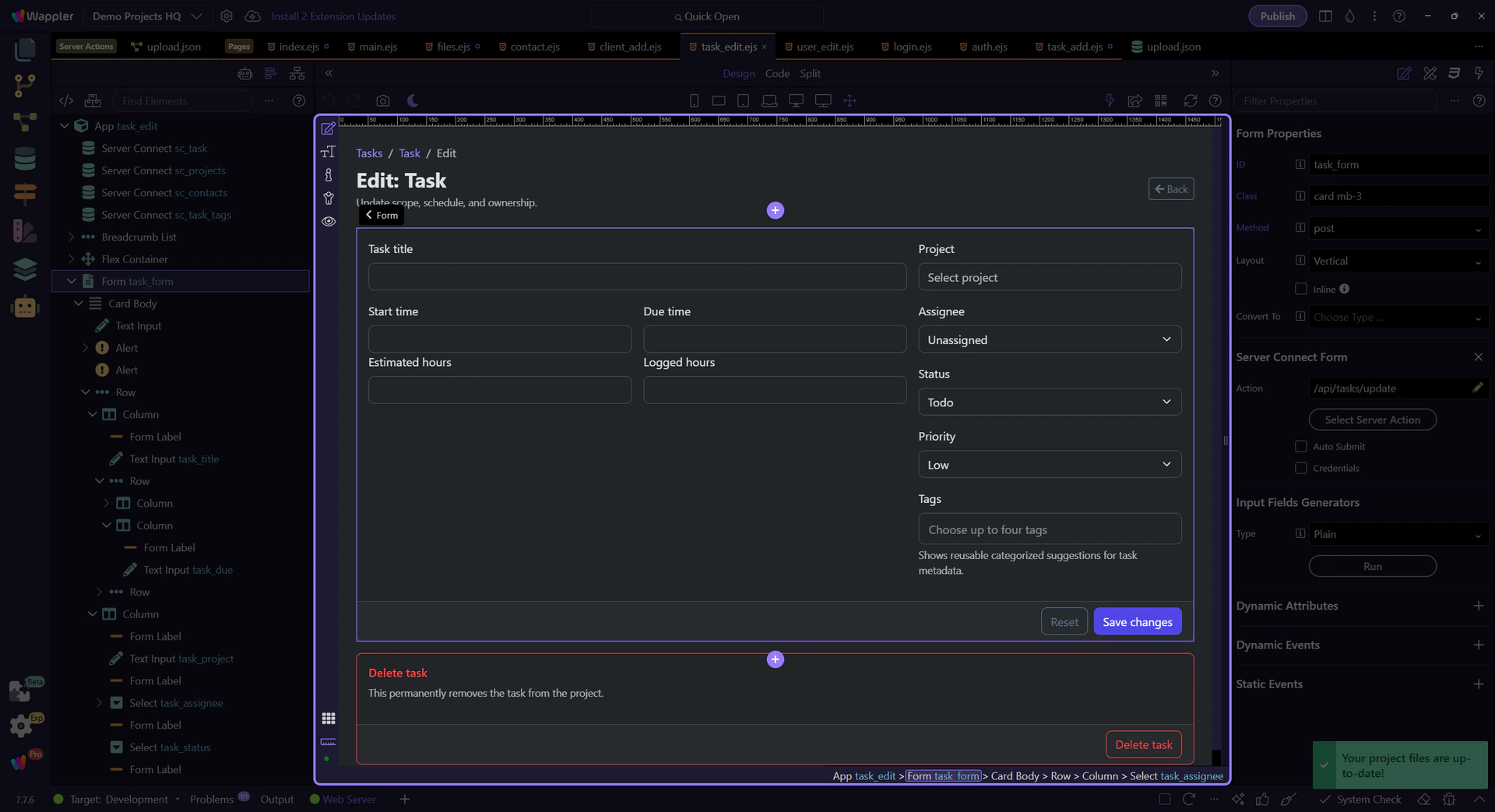
Text fields restore the saved record directly
Section titled “Text fields restore the saved record directly”#task_title is the simplest restoration example. The field does not ask the editor to remember the old value or reload it manually. App Connect binds the stored title straight back into the control before editing begins.
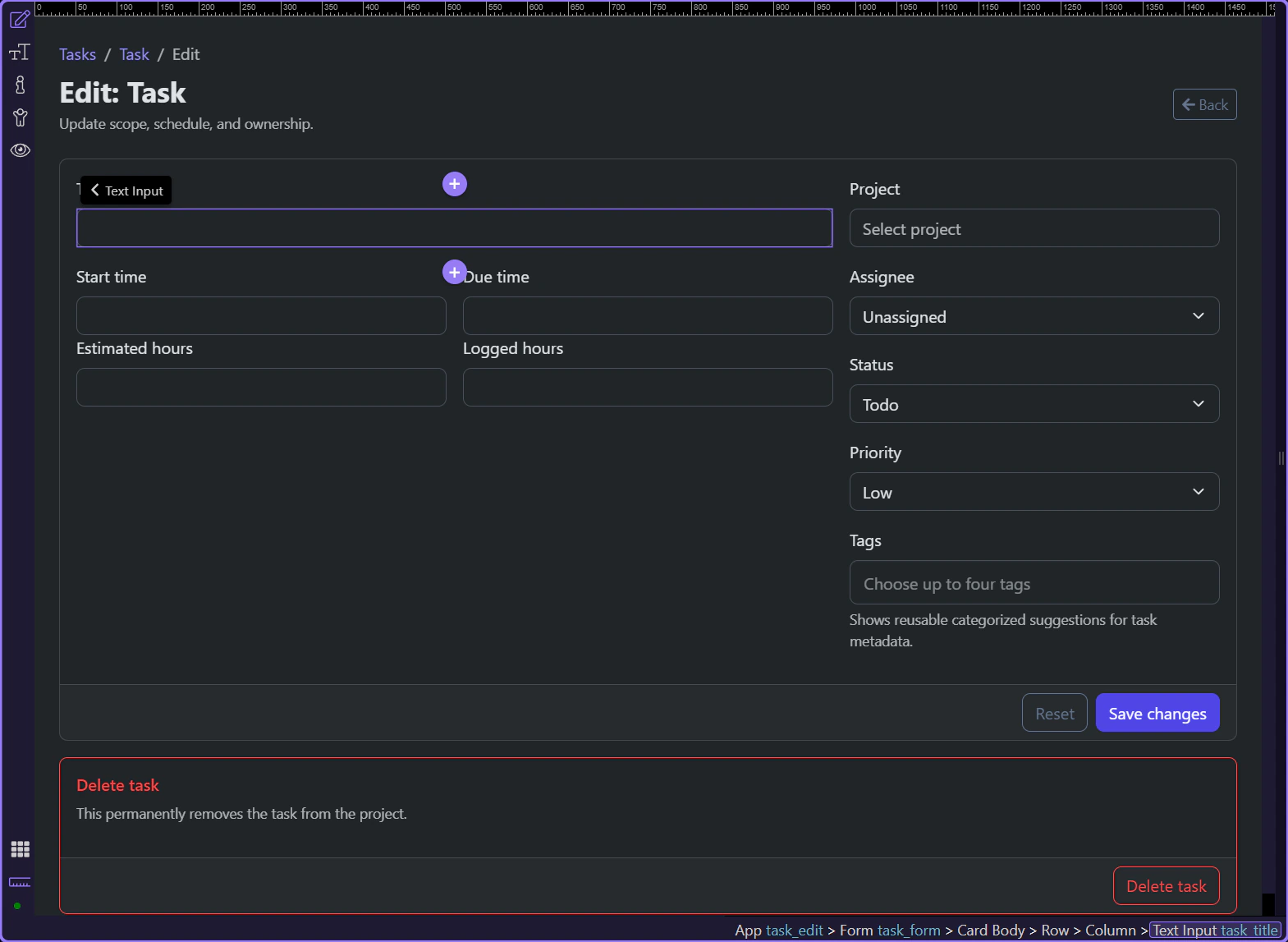
Current choices are restored in select controls
Section titled “Current choices are restored in select controls”#task_assignee, #task_status, and #task_priority are edit-state proof that restoration is not just for text boxes. The visible control has to reflect the saved relationship or status before the user changes it, or the edit form stops being trustworthy.
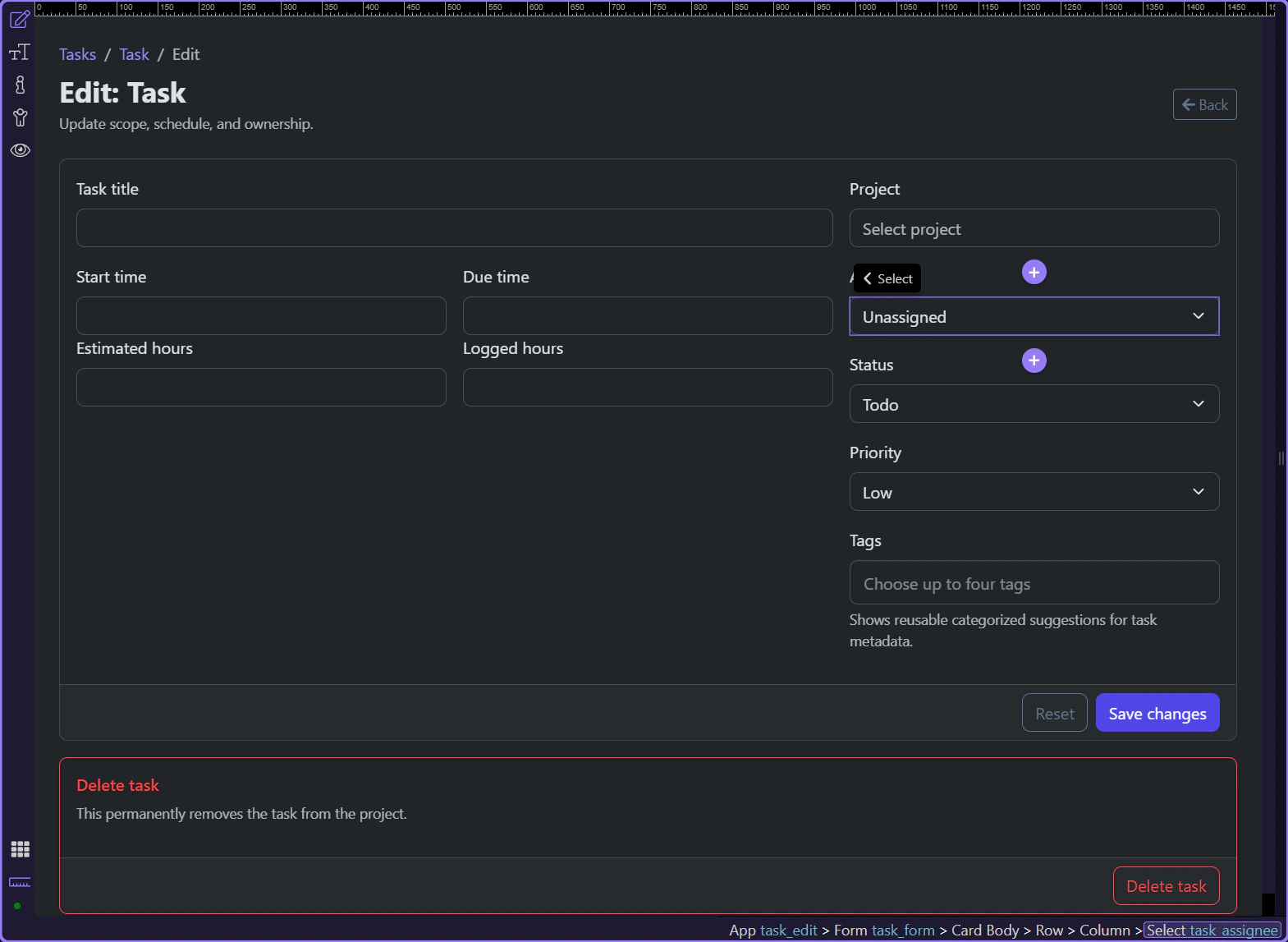
Dates and tags need restoration just as much
Section titled “Dates and tags need restoration just as much”#task_start, #task_due, and #task_tags show the more advanced side of restoration. Complex controls still need a current value before the editor interacts with them, otherwise the page silently turns an edit workflow back into a create-from-scratch workflow.
Conclusion
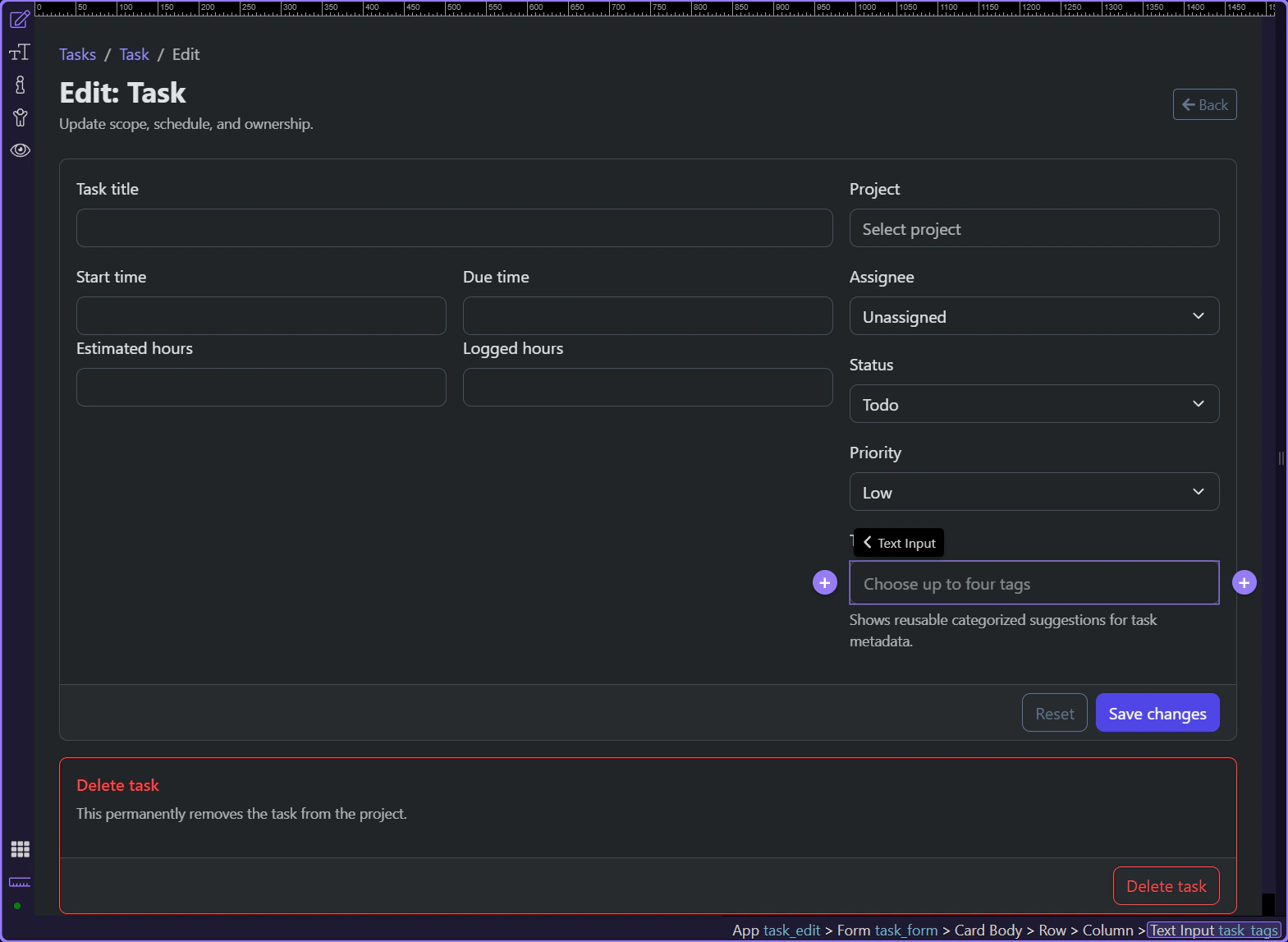
Section titled “Conclusion”An edit form is trustworthy only when the visible controls already match the saved record. Once that restoration pattern is clear, field editing, validation, and submit logic all become easier to reason about.