
Form data sources on the task form
Use the Demo Projects HQ task form to see how App Connect and Server Connect data sources feed projects, contacts, and tag choices into real form controls.
Real form controls depend on live data sources
Section titled “Real form controls depend on live data sources”The new-task page is not driven by static markup alone. Projects, contacts, and tag suggestions all arrive through data components first, then feed the controls users actually interact with. This tour stays on that page so the data-to-field relationship stays concrete.
The task form pulls several datasets into one page
Section titled “The task form pulls several datasets into one page”The task form is useful because it depends on multiple upstream datasets at once. Projects, contacts, and tag suggestions are all loaded before their controls can behave properly, so the page becomes a good map of data-source responsibilities.
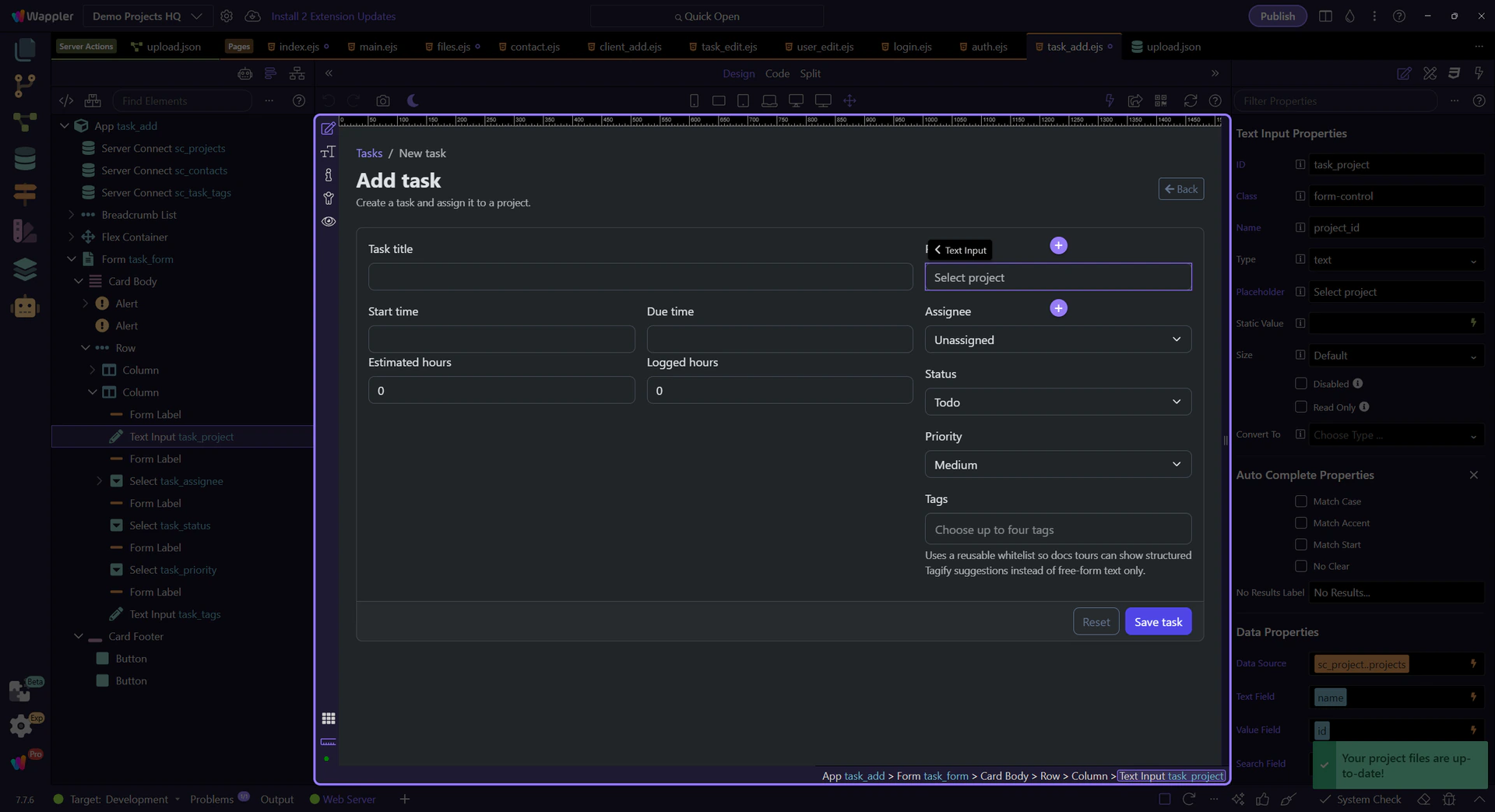
Projects feed the project picker
Section titled “Projects feed the project picker”#task_project depends on the projects dataset, not on hard-coded option rows. That is what lets the same field stay useful as projects change over time without rewriting the control itself.
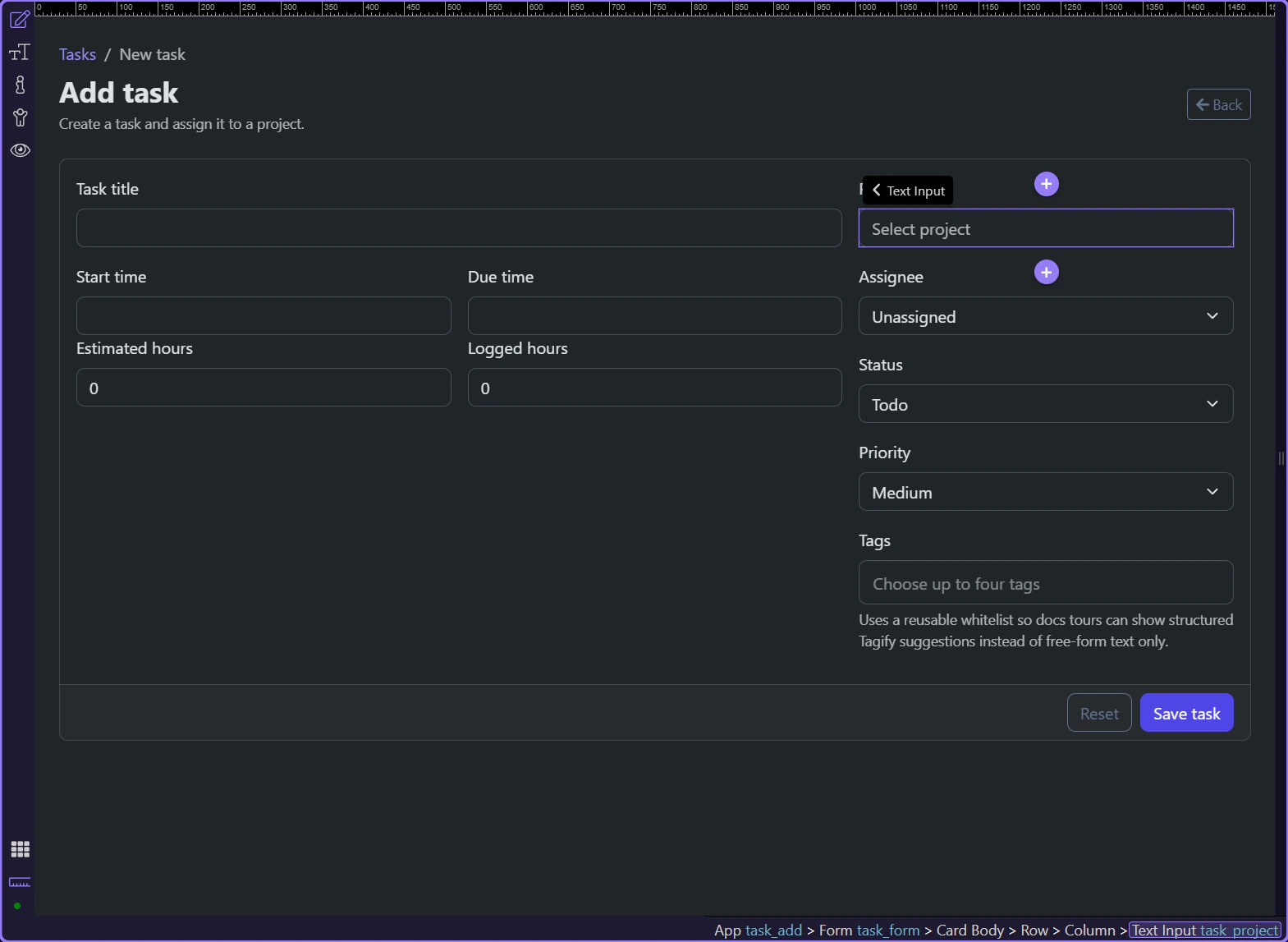
Contacts feed the assignee field
Section titled “Contacts feed the assignee field”#task_assignee is a separate control, but the same principle applies: the form stays flexible because the contact options come from data that already belongs to the page, not from a duplicated static list inside the markup.
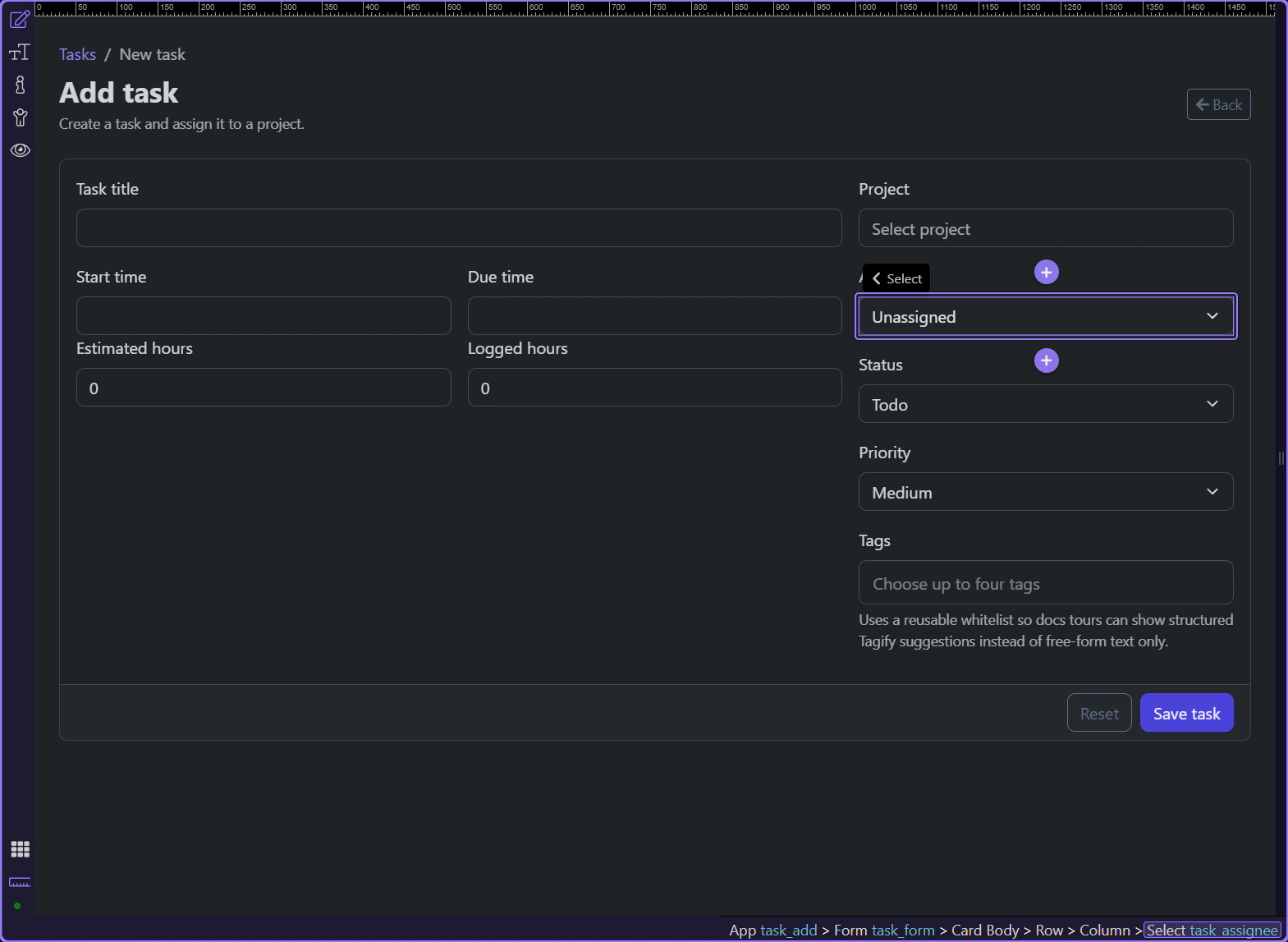
Tag suggestions feed the richer tag field
Section titled “Tag suggestions feed the richer tag field”#task_tags shows that richer widgets still follow the same source-data rule. Tagify only feels guided because the suggestions are loaded first and then mapped into the control, rather than being invented at interaction time.
Conclusion
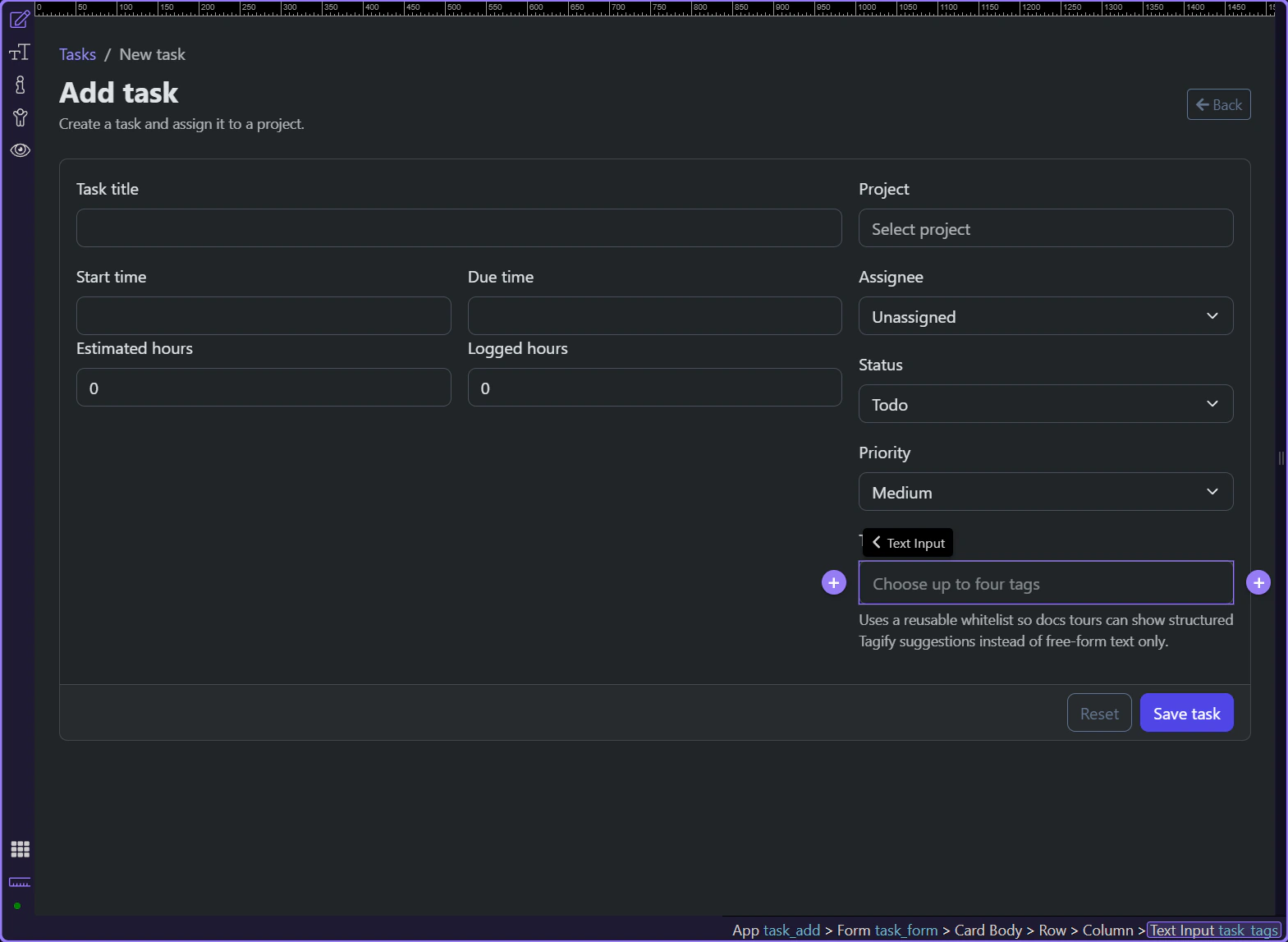
Section titled “Conclusion”The task form becomes much easier to reason about when you separate where option data comes from from how the control presents it. That is the bridge from ordinary form markup into practical App Connect form work.