
Structure first
Build the card’s structure (header/body/footer/list-group) first, then style the correct node.
Build card-based UI blocks with headers, images, lists, and layout combinations for dashboards and content.
In this tour we’ll look at common Bootstrap card patterns and the key Properties to configure (structure first, then style).
Cards are flexible content containers. A card can include header/body/footer sections and media, and works well for grouped content like a product, article, or settings block.
tip: Cards are often paired with grid columns; manage layout on the parent column, and styling on the card.
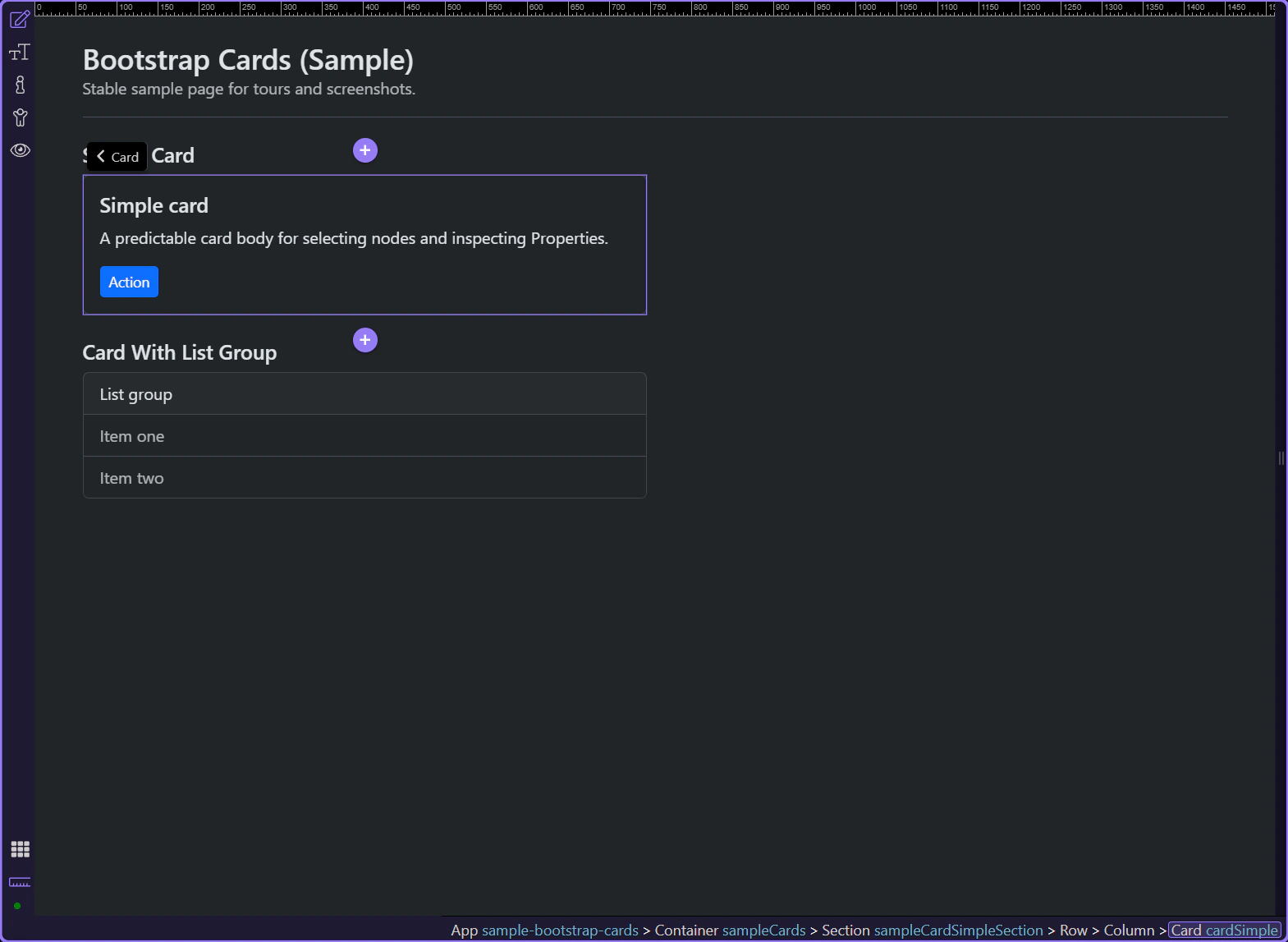
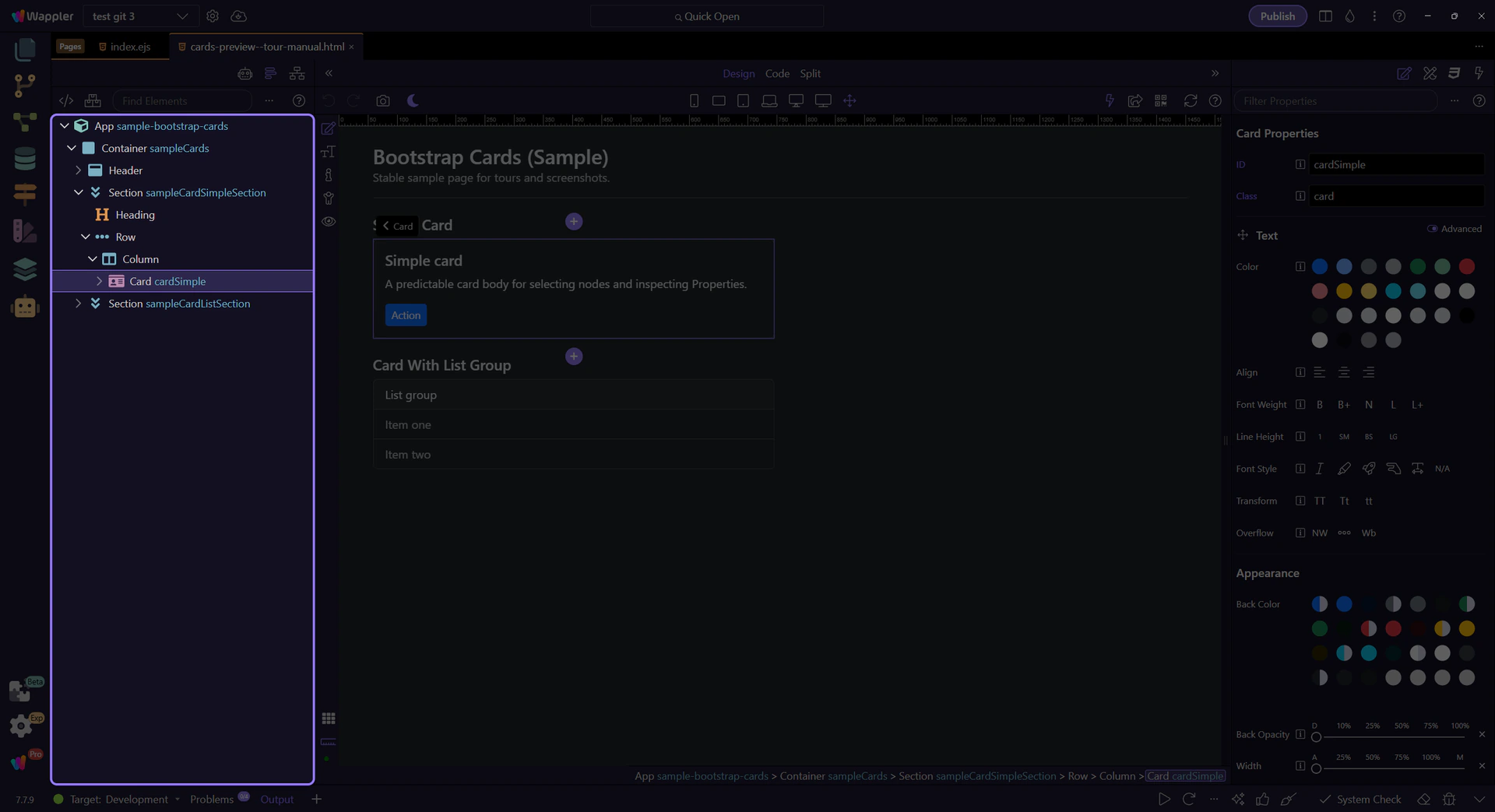
In App Structure, note the typical layout: card → header/body/footer. Select the correct node before styling.
tip: If you want padding/spacing, select
card-body.
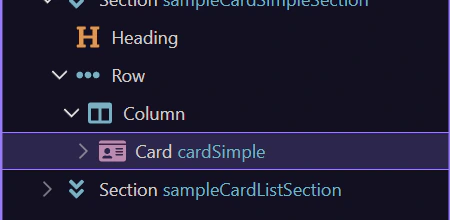
Cards often contain nested components: list-groups and buttons/links inside the body. Always select the nested component to configure its own Properties.
tip: Set a good-looking default card first, then bind dynamic data into it.
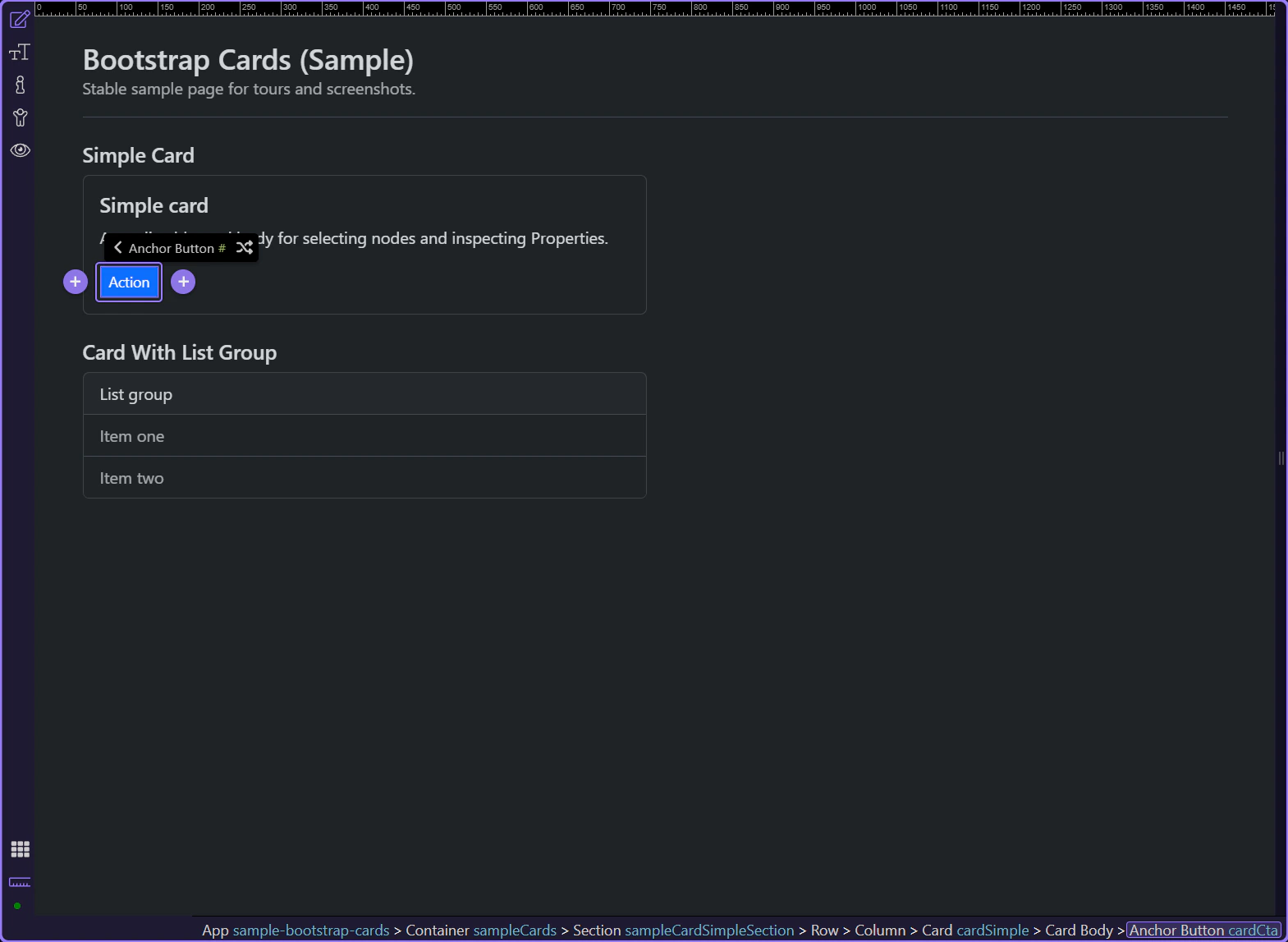
Buttons inside cards behave like any other Bootstrap button. This is where you configure variant, size, and disabled state.
tip: Buttons inside cards are still regular Bootstrap buttons—configure them like any other button.
Start with the wider context in the Properties panel so the next control makes sense in the full workflow. In the next step, you will focus on Button: Style and see how it fits into this area.
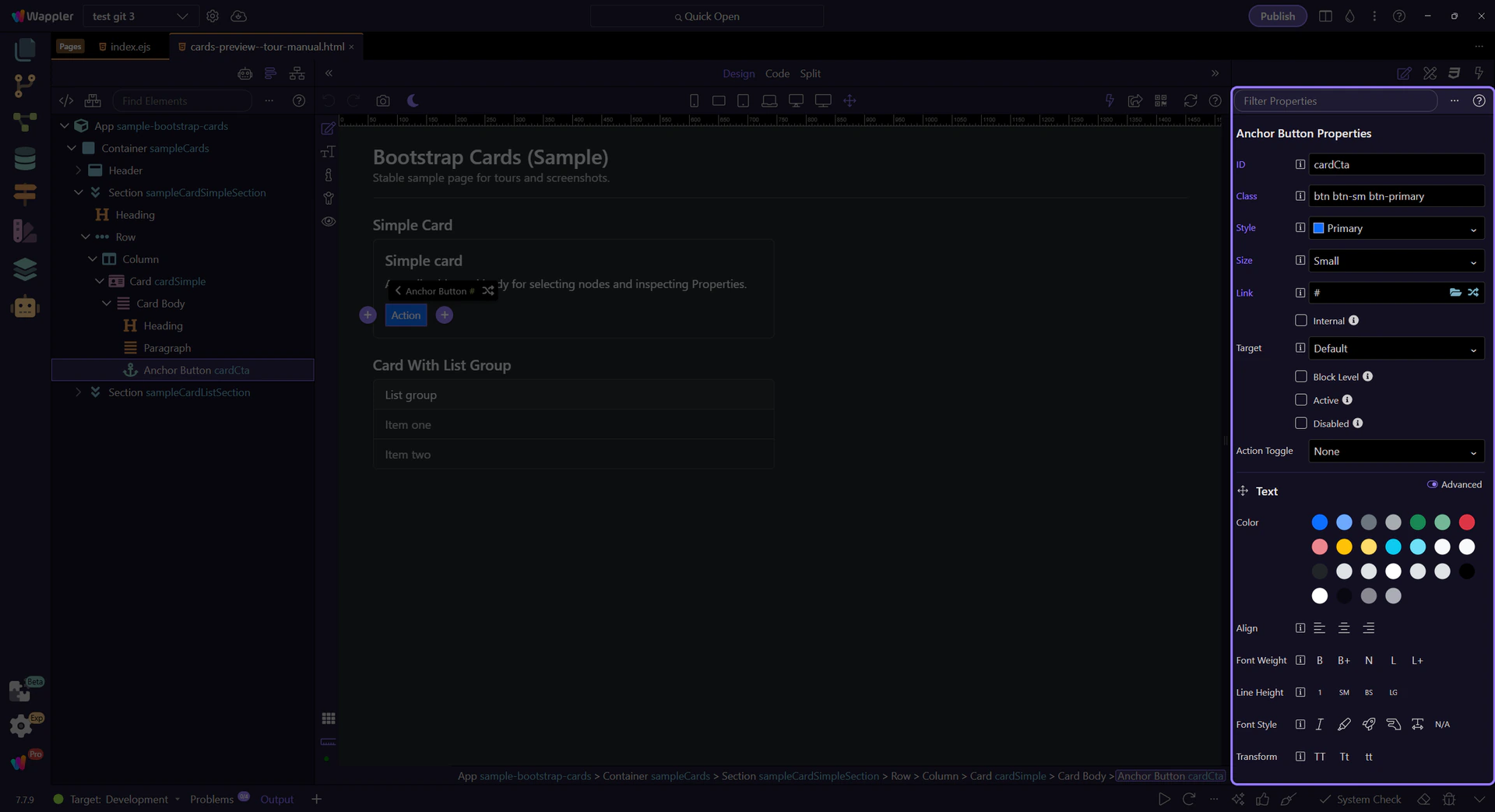
Use Style to pick the button variant (primary/secondary/outline-*, etc.). This step matters because Button: Style is part of Selection Panels Properties Btnbtnstyle, and understanding that context makes the next action easier to repeat in your own project.
tip: Prefer variants over hard-coded styles so Theme Manager can theme your UI consistently.

Use Size to switch between default, small, and large buttons. This step matters because Button: Size is part of Selection Panels Properties Anchorbtnsizen, and understanding that context makes the next action easier to repeat in your own project.

Use Link to pick where the button navigates (page/file/route). This step matters because Button: Link is part of Selection Panels Properties Anchorbtnhref, and understanding that context makes the next action easier to repeat in your own project.

To change the button label, edit the text content in Design View (double-click the button/link text).
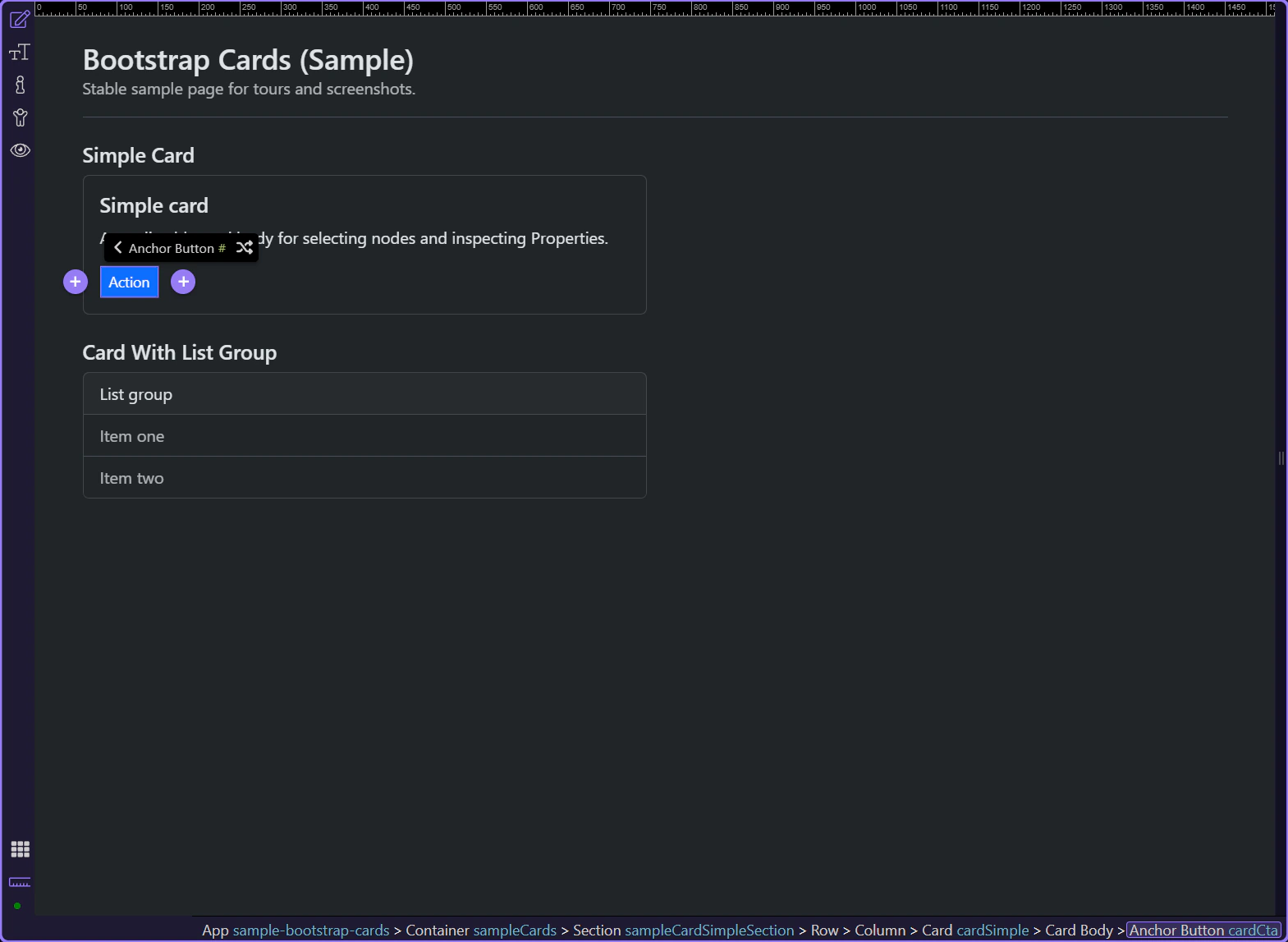
List groups inside cards are a common pattern for “card with selectable items”, like menus, results, and settings lists.
tip: Keep each item’s label short and scannable; put details on the destination page or in a secondary line.
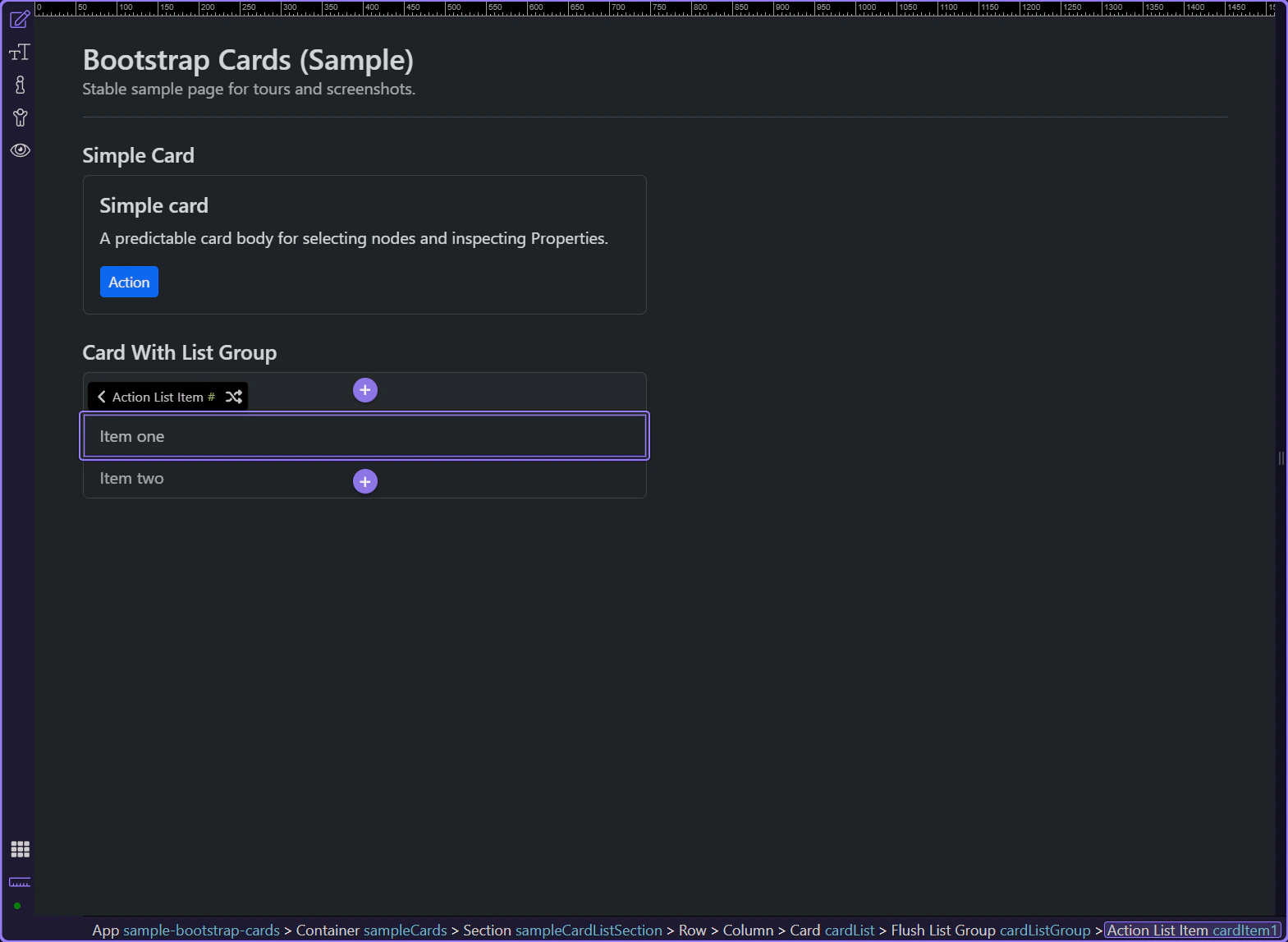
Edit the list item content in Design View (double-click the text). Use Properties mainly for state + styling options.
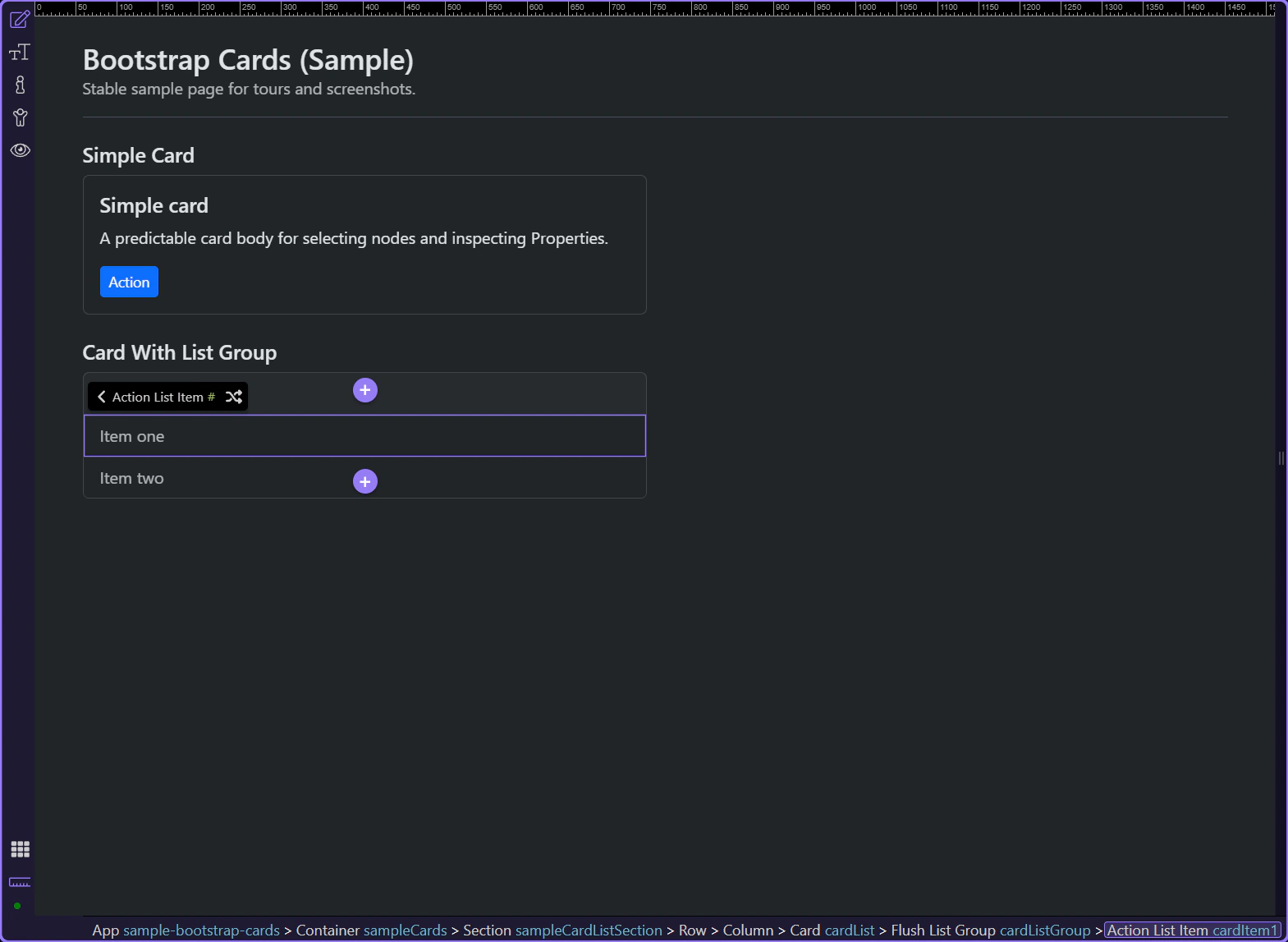
Use Active to mark the current/selected item. This step matters because List Group Item: Active is part of the Properties panel, and understanding that context makes the next action easier to repeat in your own project.
tip: For consistent spacing, apply spacing utilities on the card or list container rather than every item.
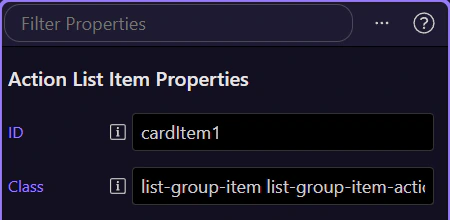
Use Disabled to make the item non-interactive. This step matters because List Group Item: Disabled is part of the Properties panel, and understanding that context makes the next action easier to repeat in your own project.
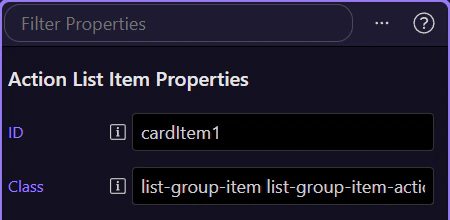
When you need to control flush/borders/spacing, select the list-group container (parent) in App Structure instead of the item.
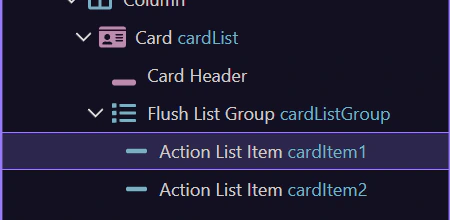
Cards are a composition pattern: build structure first (header/body/footer/list-group), then fine-tune styling with utilities.
Next, pick a related tour or go back to the Bootstrap tours index.
Before you move on, keep these rules of thumb:
tip: If you plan to bind data, design one good-looking static card first, then add repeat bindings.
Choose what you want to learn next.