Applying Dynamic Paging
You can add paging to your dynamic data, using the paging generator included in Wappler. First, you need to create a server action: And add a name for it. We call it - records_paged: Right click steps
Step 1
Section titled “Step 1”You can add paging to your dynamic data, using the paging generator included in Wappler.
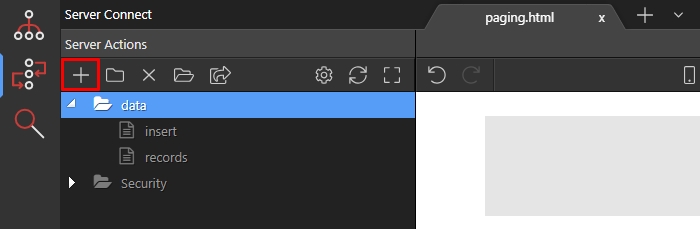
First, you need to create a server action:
And add a name for it. We call it - records_paged:
Section titled “And add a name for it. We call it - records_paged:”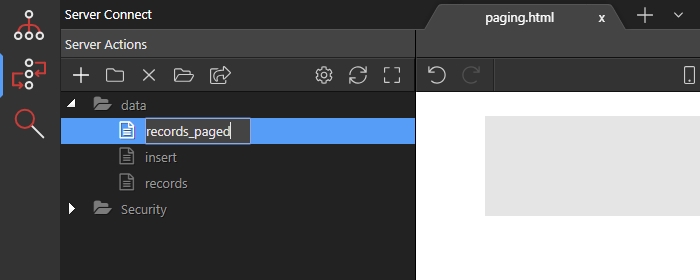
Right click steps:
Section titled “Right click steps:”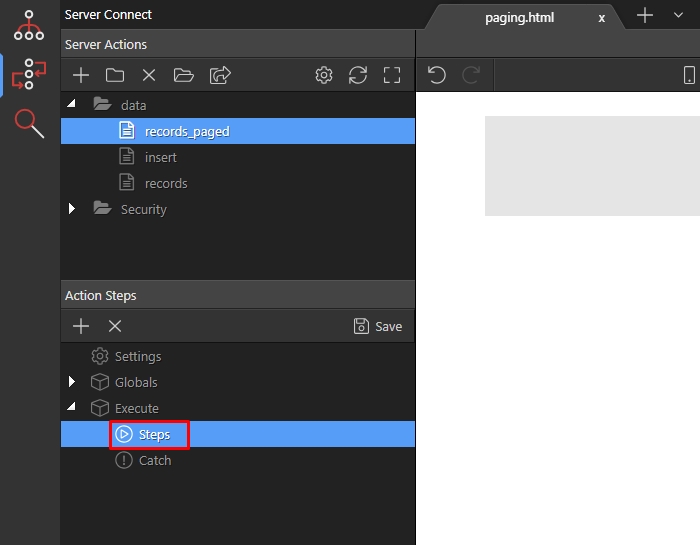
Open Database Actions:
Section titled “Open Database Actions:”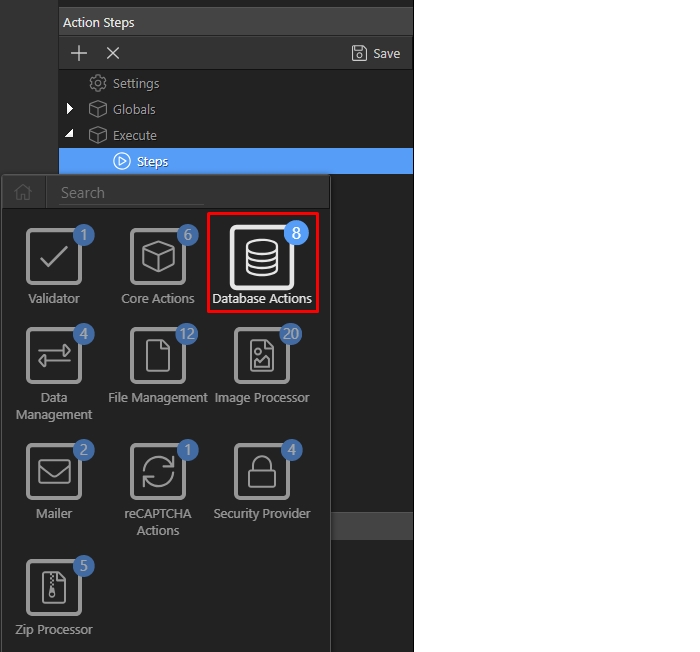
Add Database Connection:
Section titled “Add Database Connection:”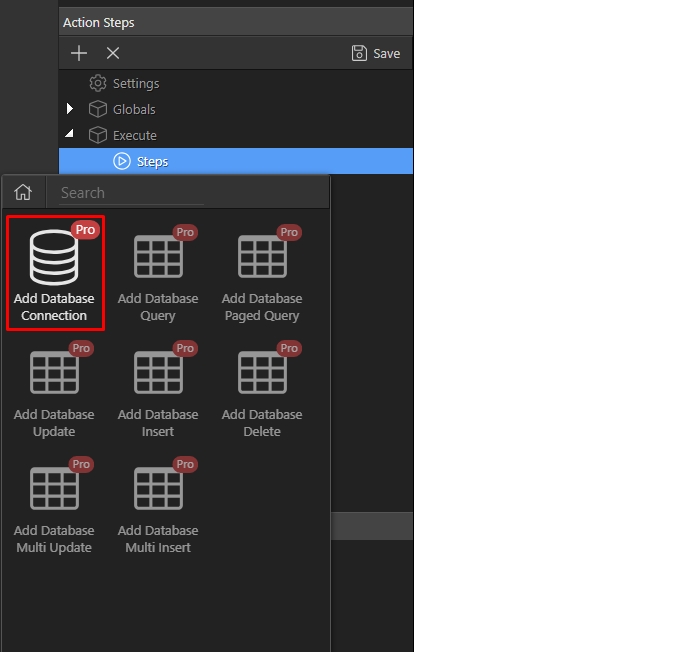
Select your database connection or create a new one, if you have not defined one yet:
Section titled “Select your database connection or create a new one, if you have not defined one yet:”
Then right click database connection step (1) and open the database actions menu (2):
Section titled “Then right click database connection step (1) and open the database actions menu (2):”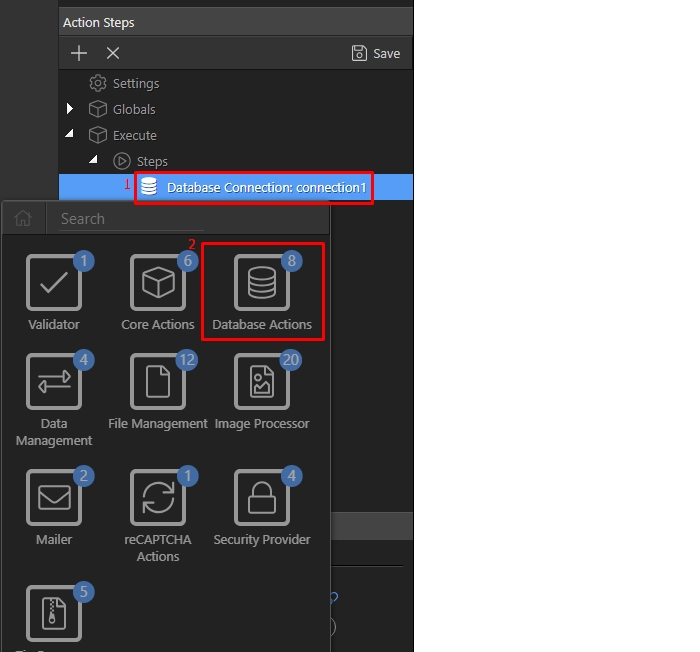
Add Database Paged Query:
Section titled “Add Database Paged Query:”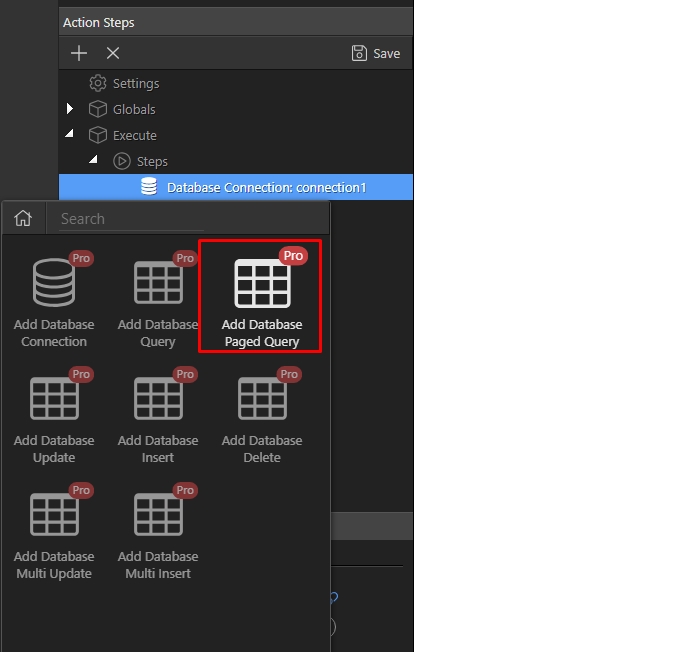
Then click the query options button:
Section titled “Then click the query options button:”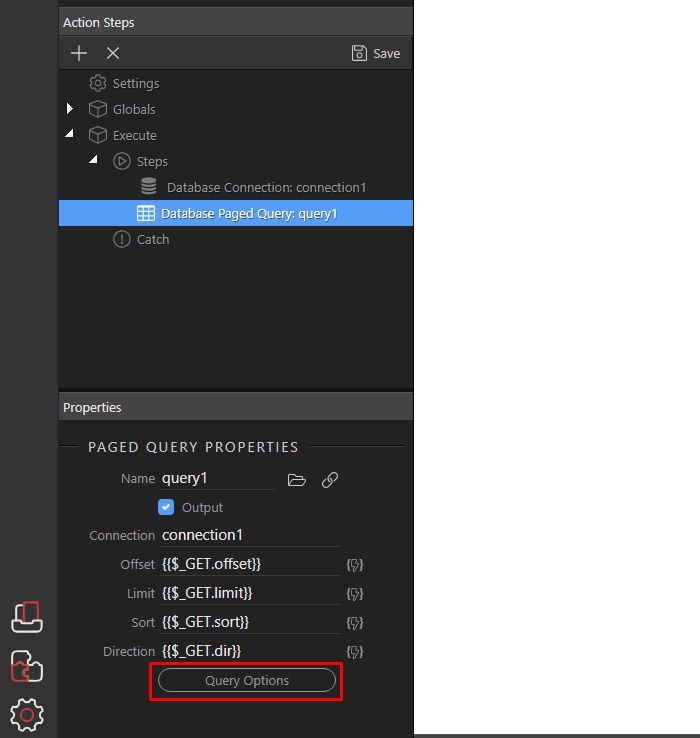
Open the add table menu:
Section titled “Open the add table menu:”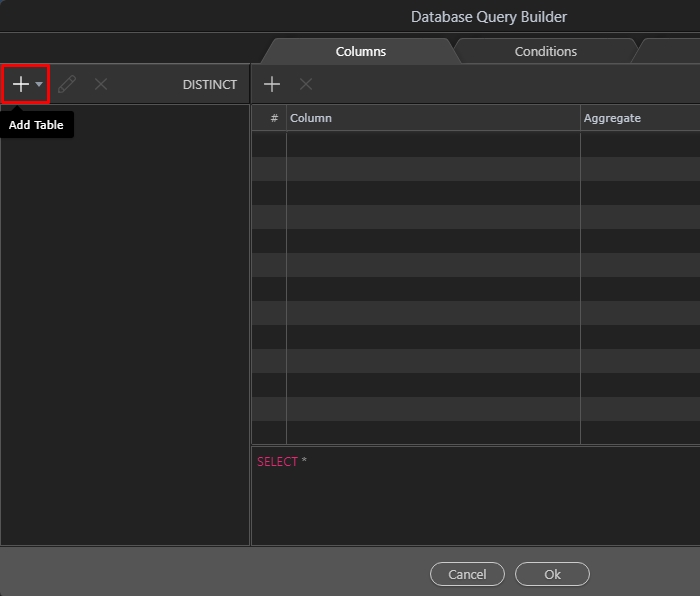
And select your database table:
Section titled “And select your database table:”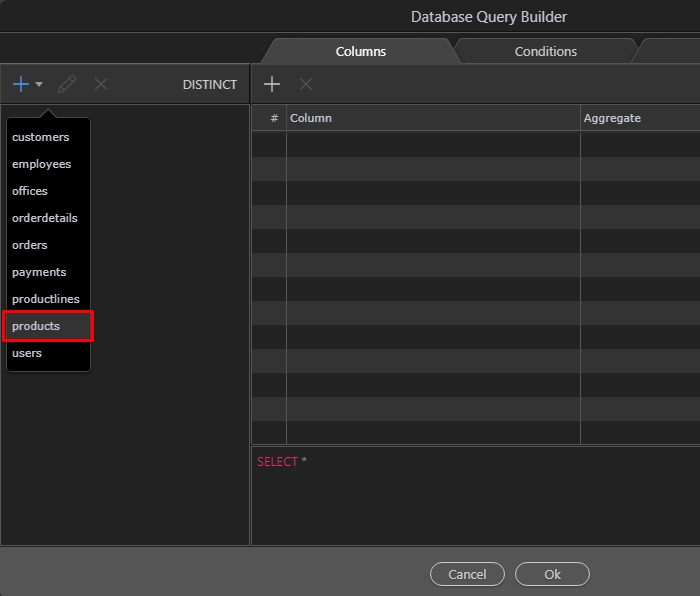
Then select the tables you need and click the add button:
Section titled “Then select the tables you need and click the add button:”
Click Ok when you are done:
Section titled “Click Ok when you are done:”
Save your server action:
Section titled “Save your server action:”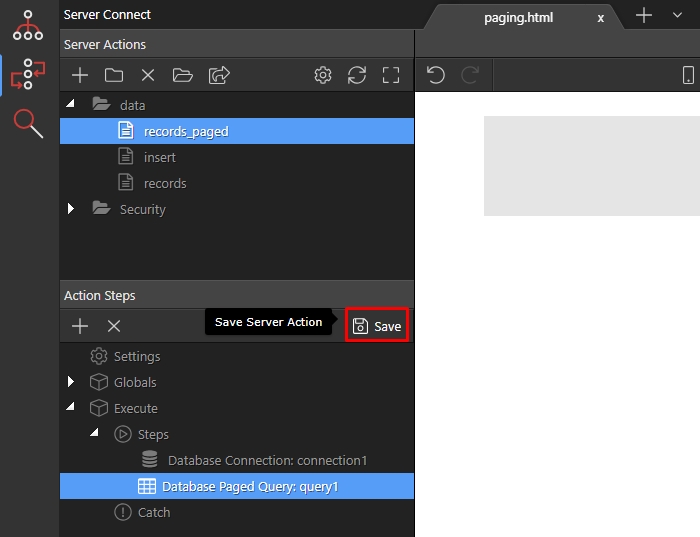
In app structure panel add new component:
Section titled “In app structure panel add new component:”
Open Data:
Section titled “Open Data:”
And add server connect component:
Section titled “And add server connect component:”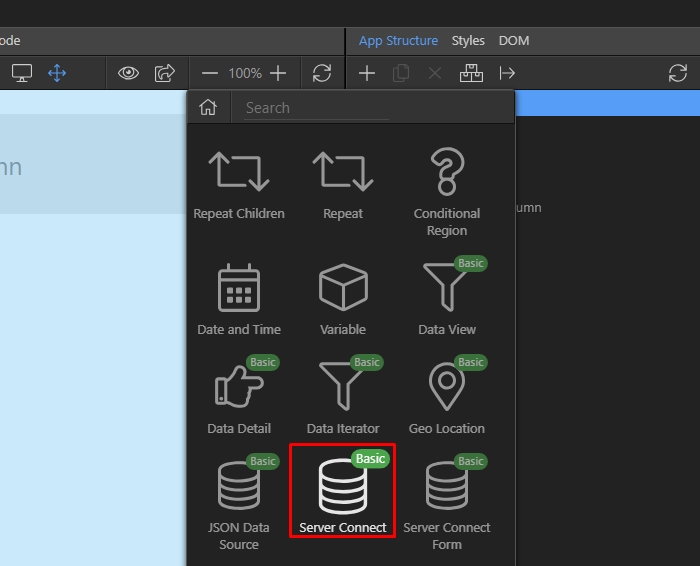
Then click the select server action button:
Section titled “Then click the select server action button:”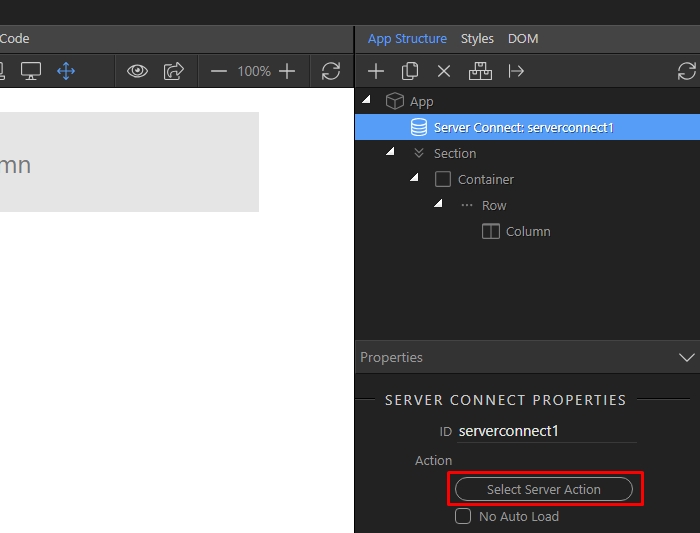
Here we select the server action with the paged database query which we just created:
Section titled “Here we select the server action with the paged database query which we just created:”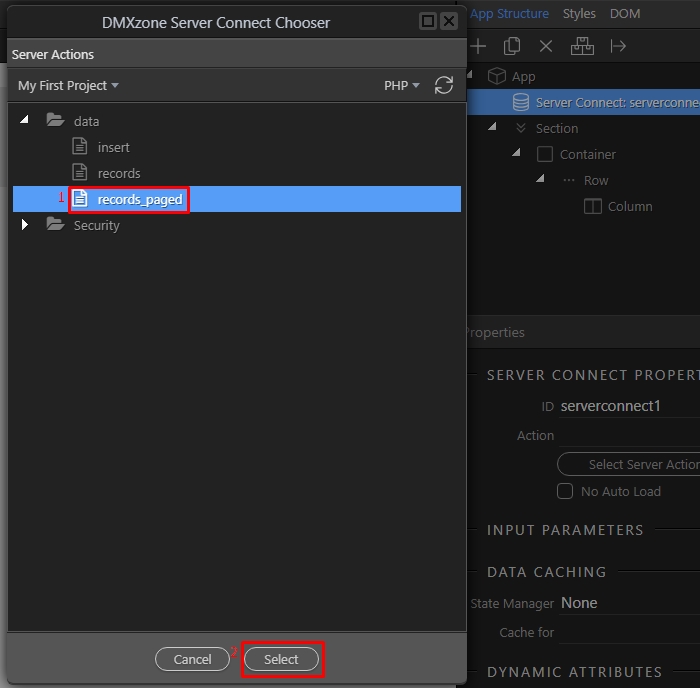
Step 20
Section titled “Step 20”We add a dynamic table, displaying our records on the page. Make sure to select the data object, under database query as an expression for it:
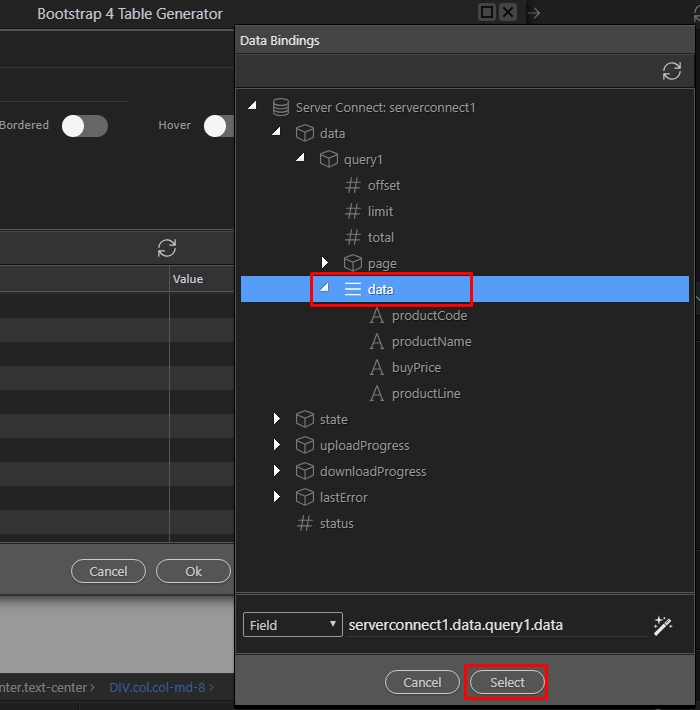
Then, we add new component:
Section titled “Then, we add new component:”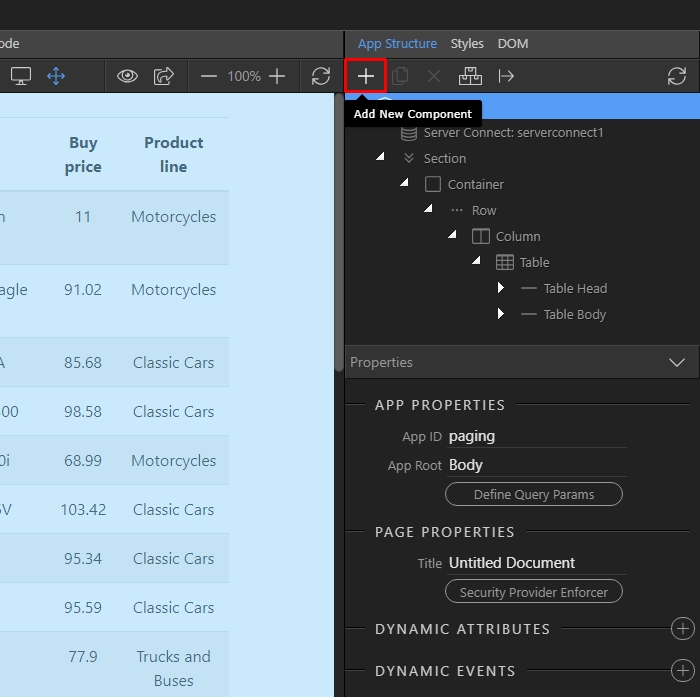
Open the state management menu:
Section titled “Open the state management menu:”
And add query manager:
Section titled “And add query manager:”
Step 24
Section titled “Step 24”We are going to define a query parameter, which will store the current paging state. This way the current page won’t be lost on page refresh:
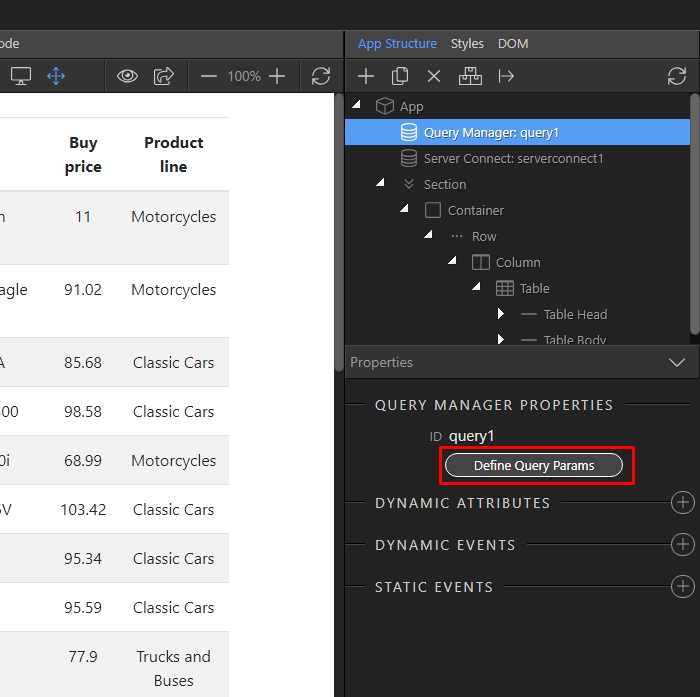
Click the add new button:
Section titled “Click the add new button:”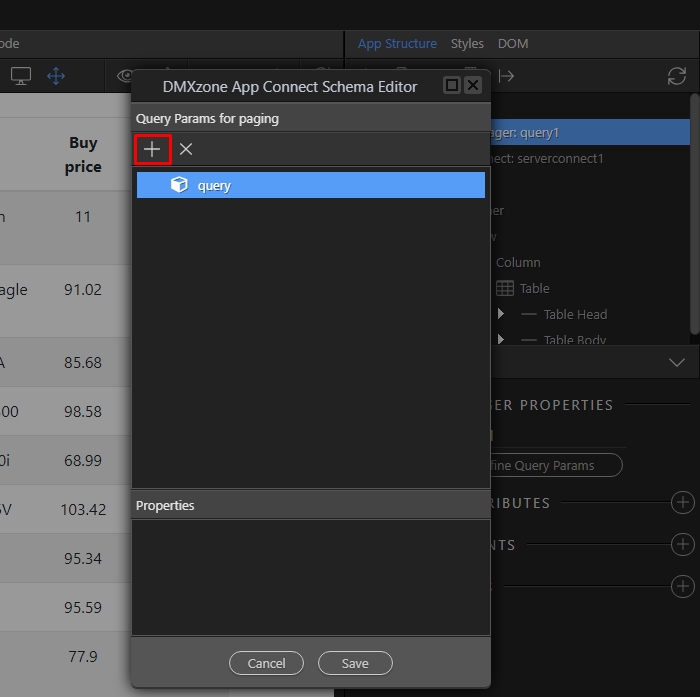
Add variable:
Section titled “Add variable:”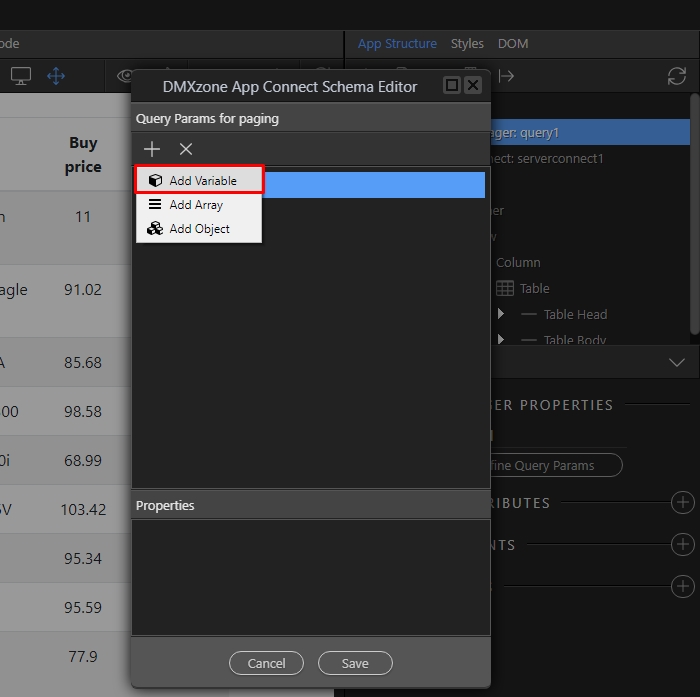
Call it offset and click the save button:
Section titled “Call it offset and click the save button:”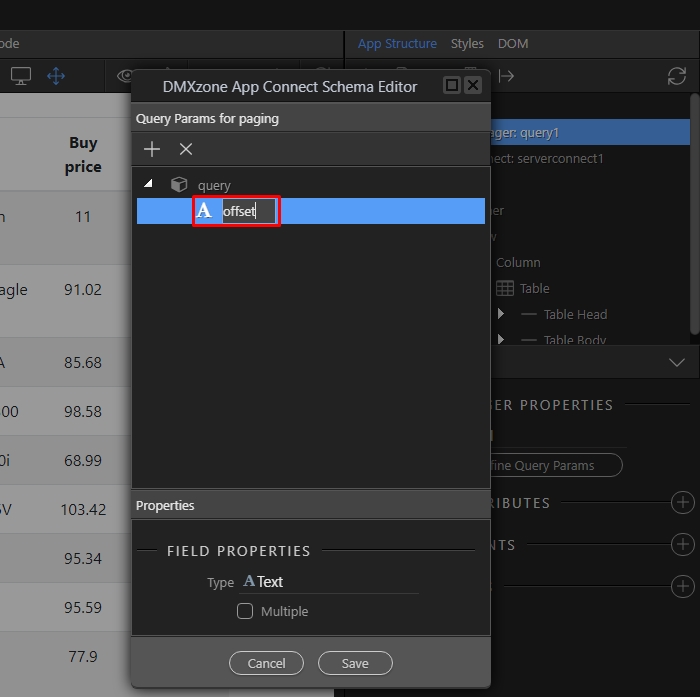
Then select the server connect component (1) and click the dynamic data picker for the offset parameter (2):
Section titled “Then select the server connect component (1) and click the dynamic data picker for the offset parameter (2):”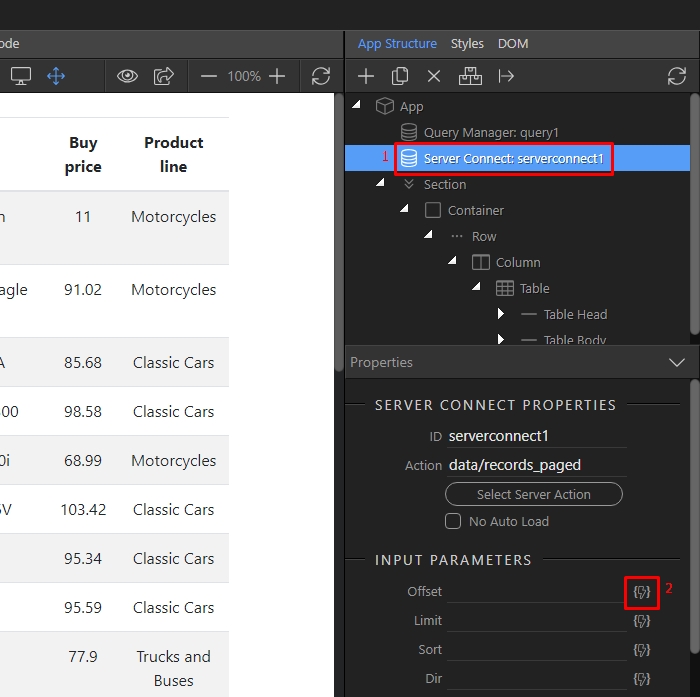
Bind the query parameter called offset which we just created:
Section titled “Bind the query parameter called offset which we just created:”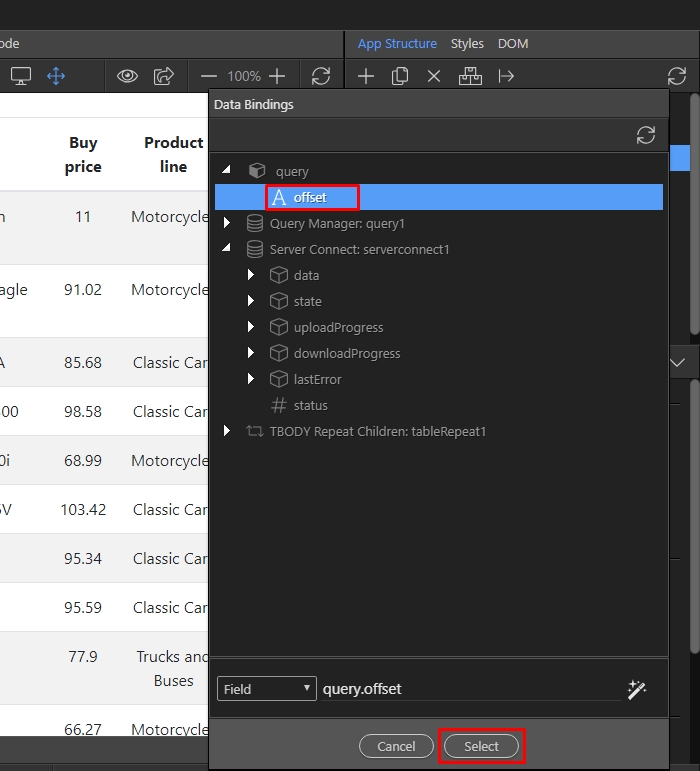
We right click the table, displaying our records:
Section titled “We right click the table, displaying our records:”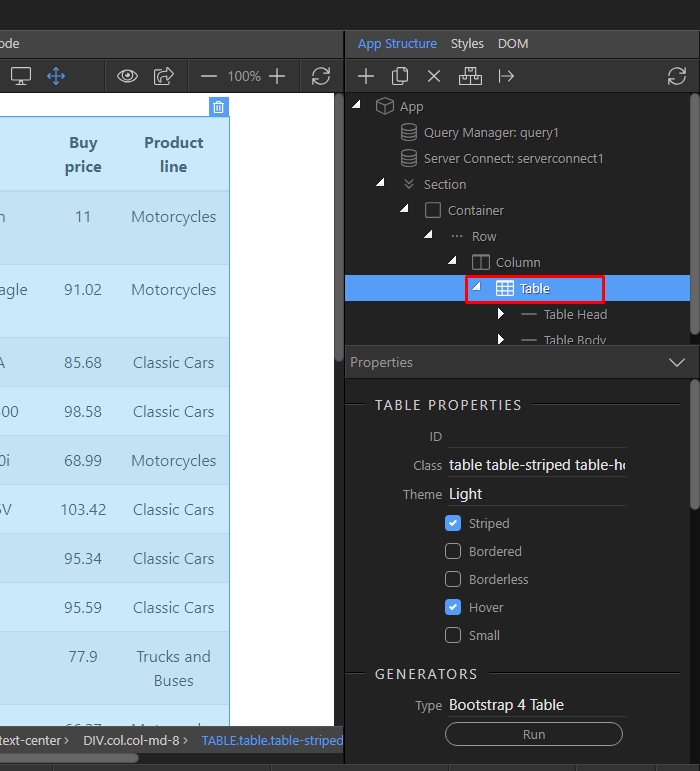
Select insert after:
Section titled “Select insert after:”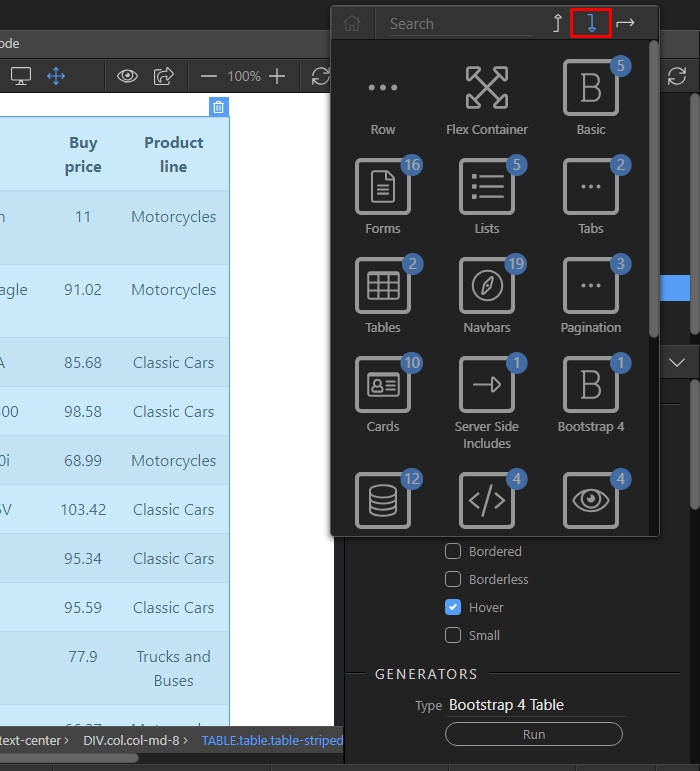
Open Generators:
Section titled “Open Generators:”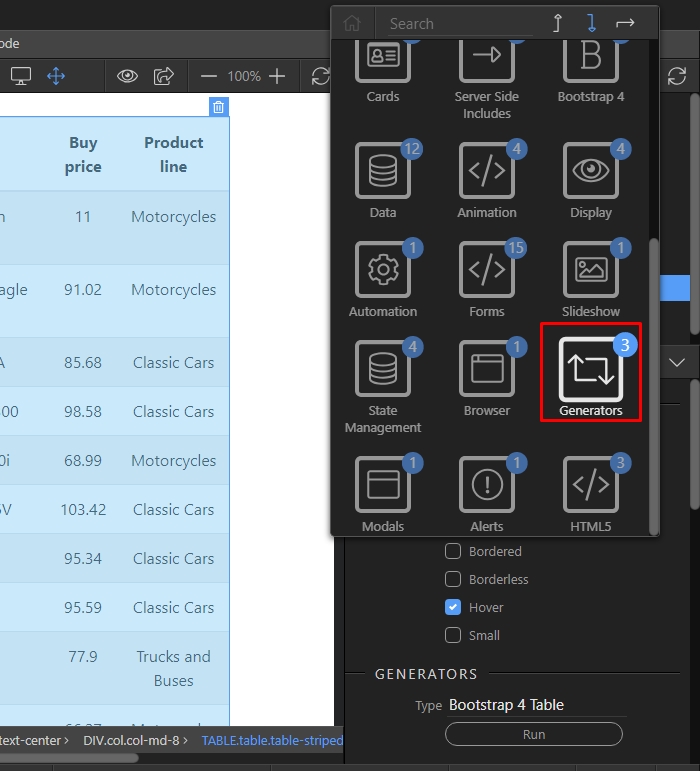
And select paging generator:
Section titled “And select paging generator:”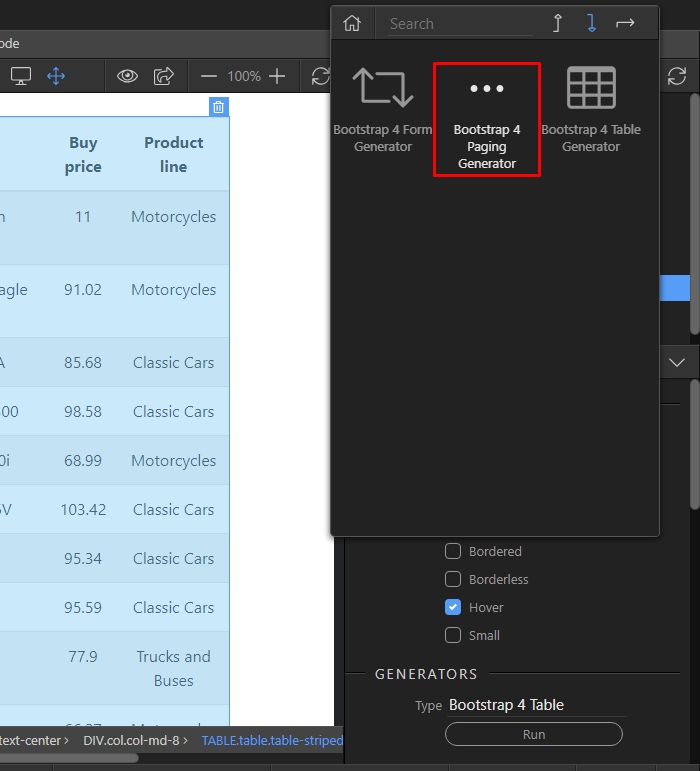
Select the data source for the generator:
Section titled “Select the data source for the generator:”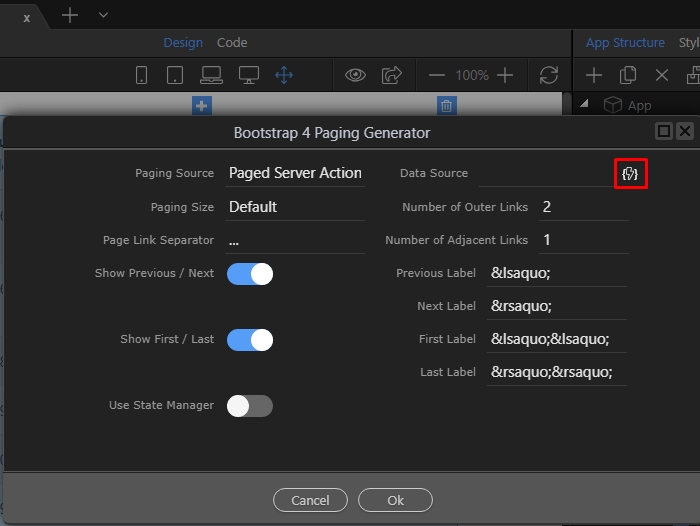
This is our paged query, located in the server connect component:
Section titled “This is our paged query, located in the server connect component:”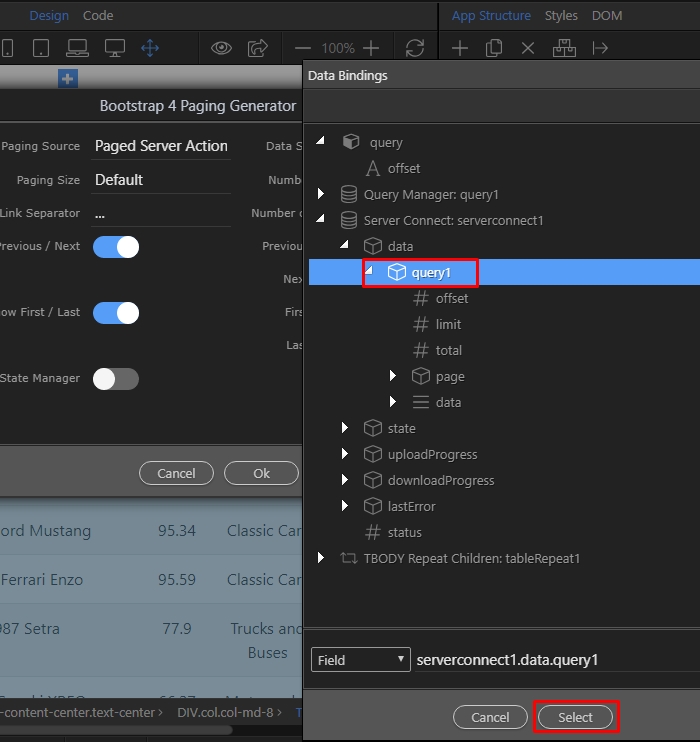
Setup the paging appearance options:
Section titled “Setup the paging appearance options:”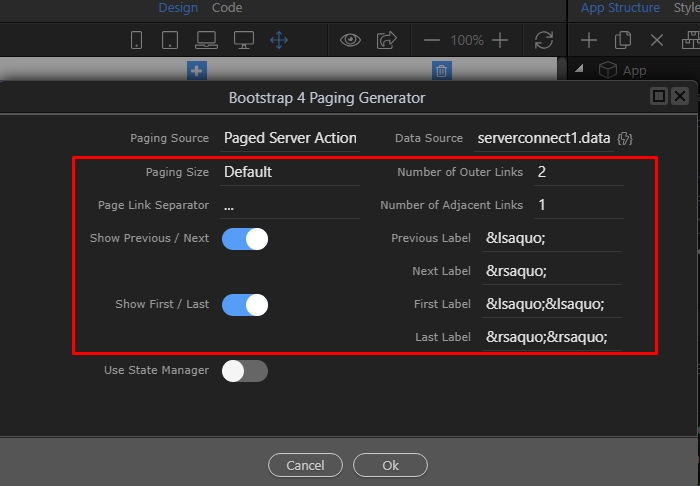
Then enable the state manager option:
Section titled “Then enable the state manager option:”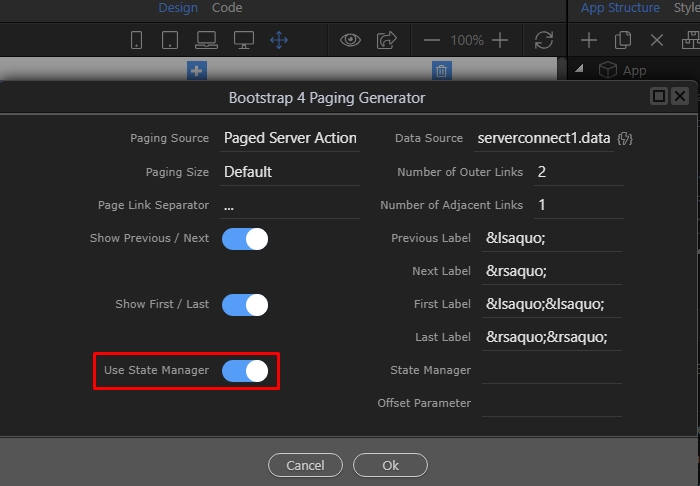
Open the state manager drop-down and select the state management component which we created:
Section titled “Open the state manager drop-down and select the state management component which we created:”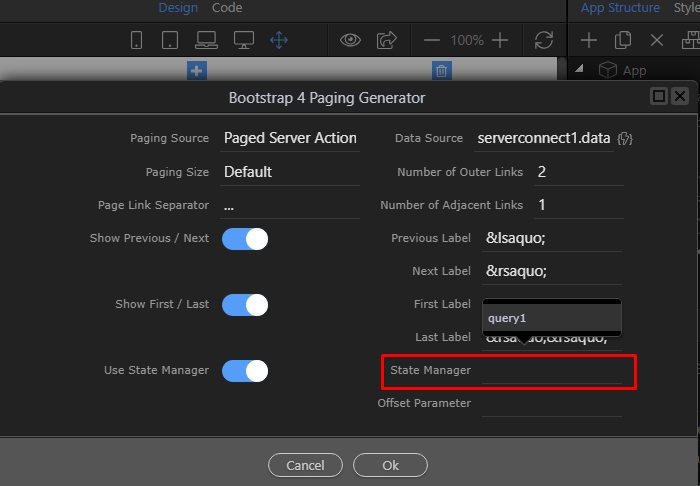
Then select the offset query parameter from the offset menu:
Section titled “Then select the offset query parameter from the offset menu:”
Click the Ok button:
Section titled “Click the Ok button:”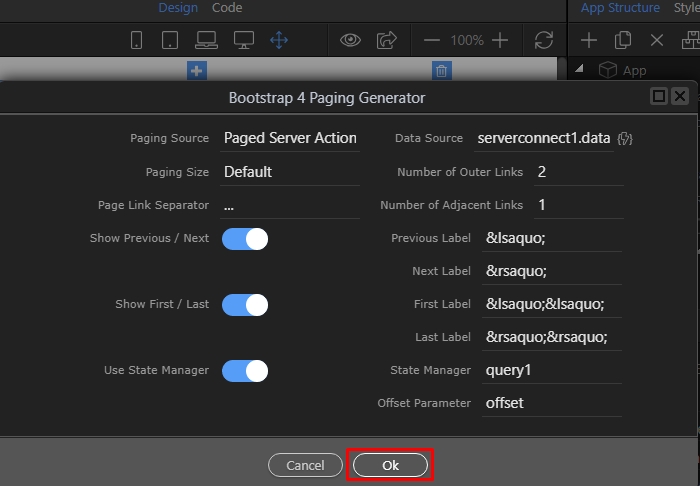
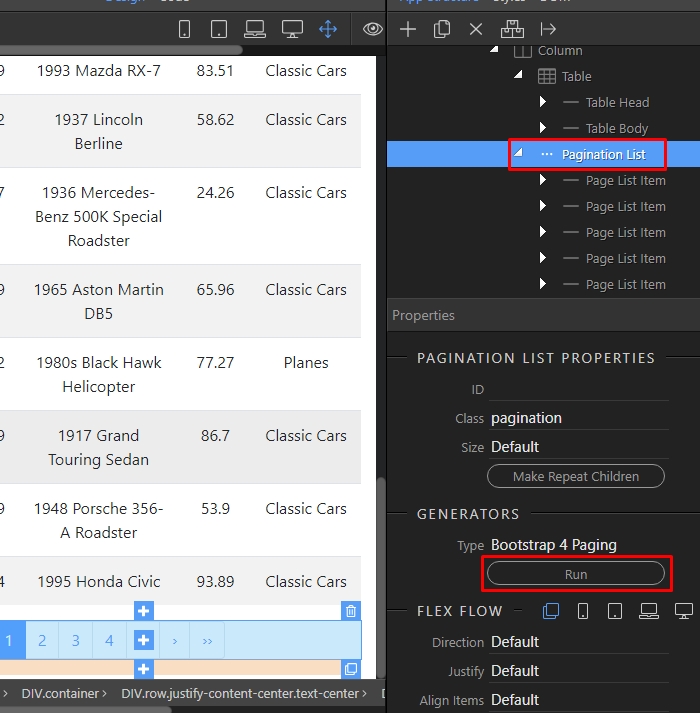
You can see the paging in design view and in the app structure. It can be edited by clicking the Run button:
Section titled “You can see the paging in design view and in the app structure. It can be edited by clicking the Run button:”